Moving to a new country can change more than your address.
For many Indians living in Sydney, life can feel like a constant balancing act. There is work to build, relationships to maintain, children to raise, financial decisions to make and, sometimes, the quiet pressure of staying connected to the traditions we grew up with.
That is one reason Vedic astrology continues to attract interest among Sydney’s Indian community.
For some people, it is deeply connected to family tradition. For others, it is something they discover later in life when they are facing a major decision and want another perspective before moving forward.
And increasingly, people are not necessarily looking for dramatic predictions about the future.
They want clarity.
They want to understand why a particular phase of life feels difficult, when it may be better to make an important decision, and how they can approach the situation with greater awareness.
This is where a personalised Vedic astrology consultation can feel very different from reading a generic horoscope online.
At Aunkar Vastu, astrology consultations are based on individual birth details and personalised interpretation. The practice is led by Acharya Oum Prakash Sharma, who states more than 25 years of experience in Vastu Shastra, Astrology and Numerology.
So, why are more Sydney Indians exploring this traditional form of guidance?
Let’s look at seven reasons.
1. Vedic Astrology Connects Modern Questions With an Indian Tradition
One of the simplest reasons people turn to Vedic astrology is familiarity.
For generations, Indian families have consulted astrologers for important milestones such as marriage, education, business, naming ceremonies and other major life decisions.
But living in Australia can create a different relationship with that tradition.
Someone who grew up hearing about Kundli from their parents may not have taken astrology seriously when they were younger. Years later, after moving to Sydney and experiencing the pressures of adult life, they may become curious about the tradition they once overlooked.
There is also something comforting about having a familiar cultural framework while living thousands of kilometres away from India.
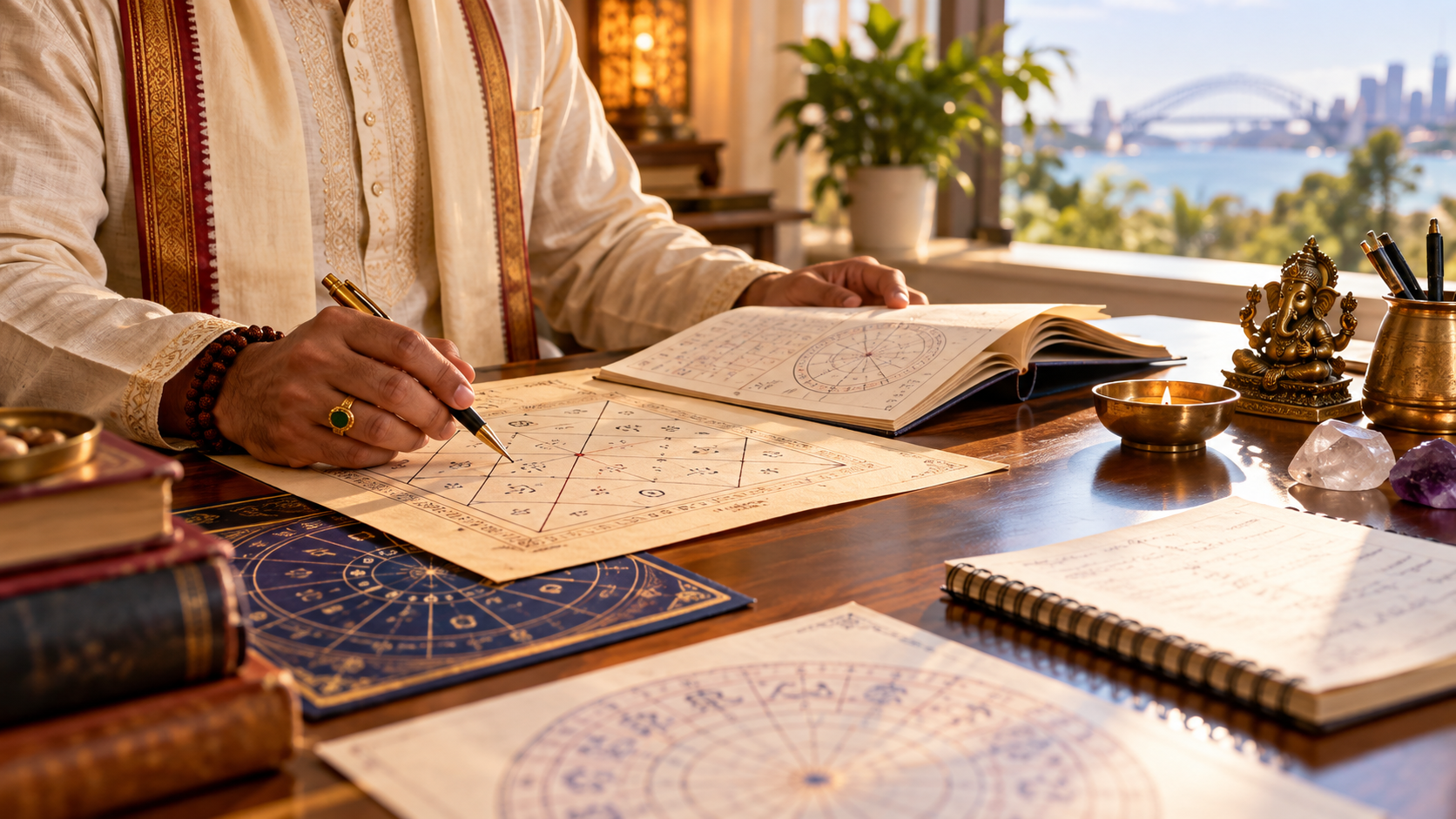
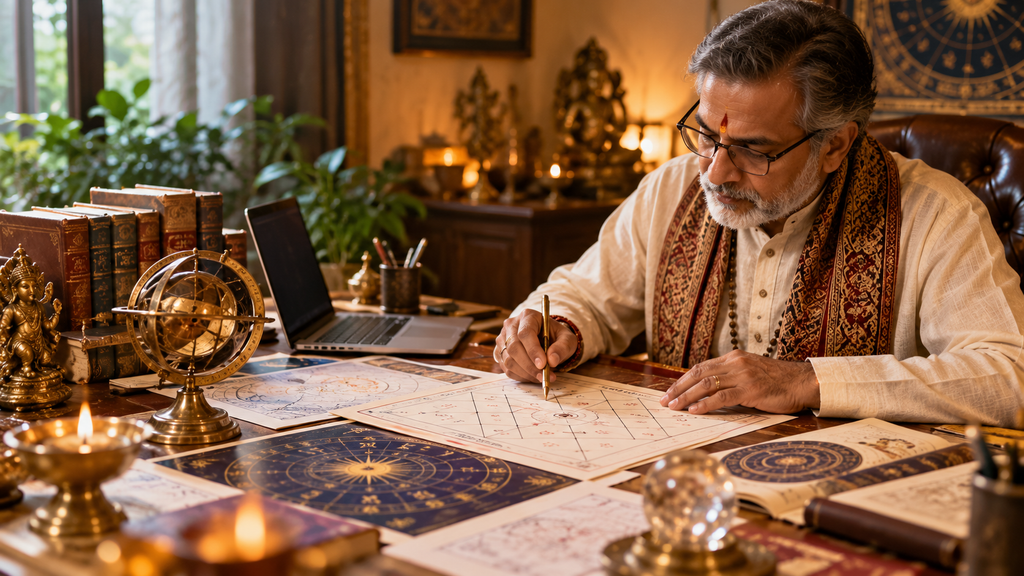
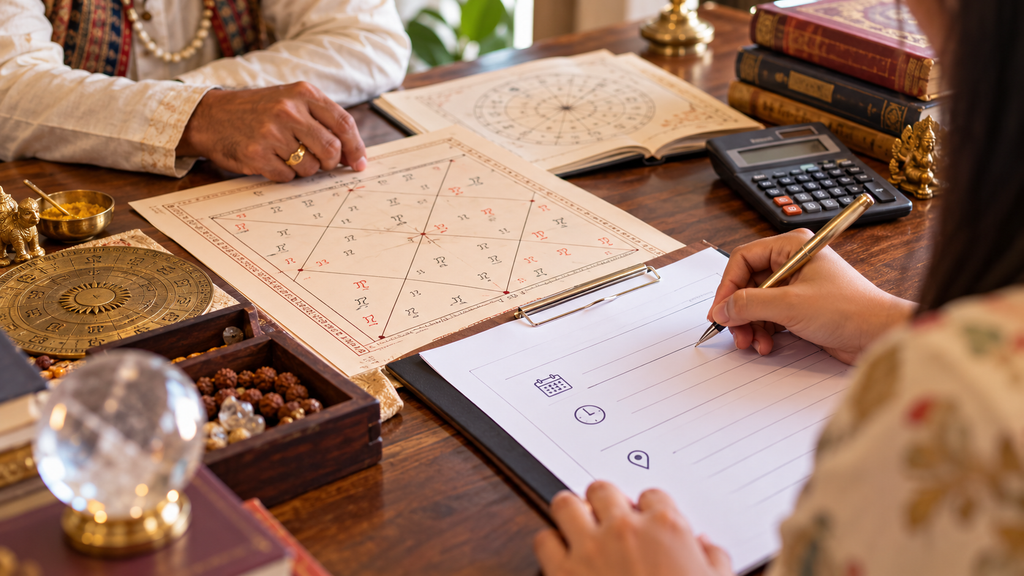
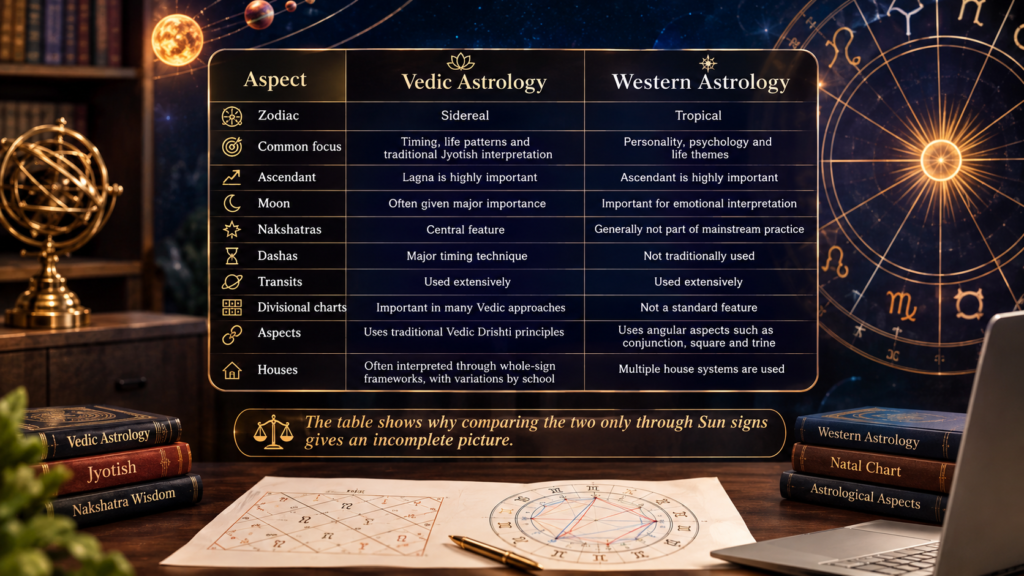
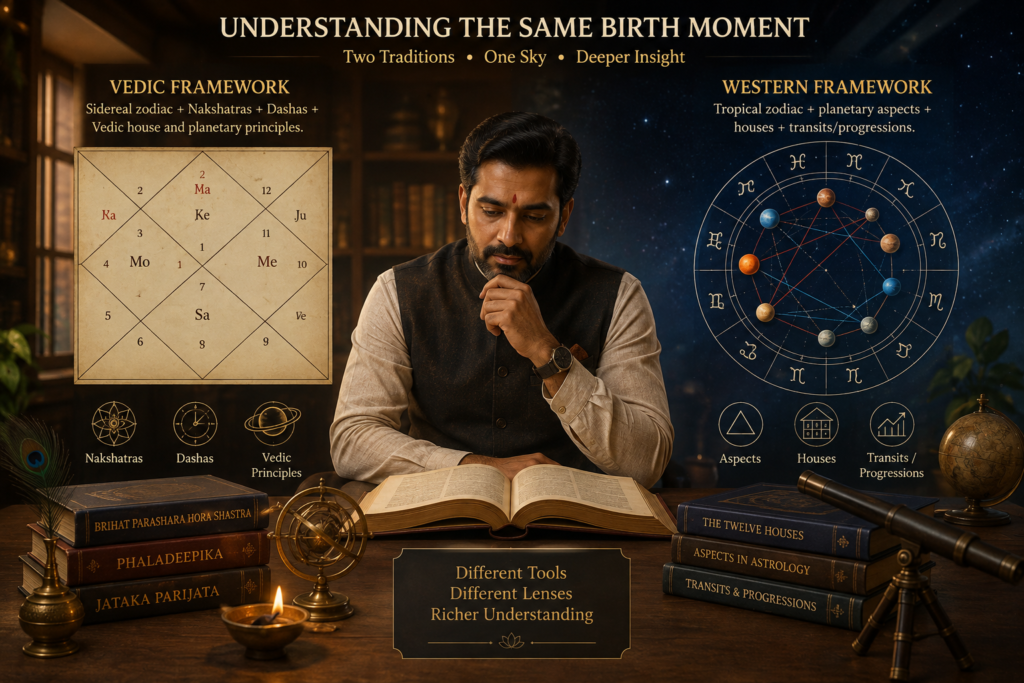
Vedic astrology, or Jyotish, traditionally works with a birth chart calculated from details such as the date, time and place of birth. An astrologer may then examine elements including the Ascendant, Moon sign, planetary positions, houses, Nakshatras, Dashas and transits.
The important point is that a proper consultation is much more individual than a newspaper-style zodiac prediction.
Your birth chart belongs to your particular birth circumstances.
That personal element is one reason people looking for an astrologer in Sydney may prefer a consultation that begins with their own questions rather than a generic prediction.
2. Sydney Life Comes With Decisions That Don’t Always Have Easy Answers
Life in Sydney can be exciting, but it can also involve some very practical uncertainties.
Should you change careers?
Is it the right time to start a business?
Should you move to another suburb?
Are you ready for marriage?
Should you wait before making a major investment?
Should you relocate again?
These are not questions with simple yes-or-no answers.
Astrology does not need to replace practical decision-making to be useful to someone who believes in it. Instead, many people approach it as another perspective through which they can reflect on their circumstances.
For example, someone considering a career change may already have the practical information they need: salary, industry outlook, location and responsibilities.
An astrology consultation may address a different question:
“Does this period of my life appear supportive for change, and what should I be mindful of?”
That distinction is important.
A thoughtful astrologer should not encourage someone to ignore professional, financial, legal or medical advice. Rather, astrology can sit alongside normal decision-making as a personal or spiritual framework.
3. People Want More Than Generic Horoscope Predictions
Open any social media platform and you will find astrology content.
“Three zodiac signs will get good news this month.”
“Your lucky day is Friday.”
“Someone from your past may return.”
It can be entertaining, but it is not the same as a personalised birth-chart consultation.
One of the reasons people search for the best astrologer in Sydney is that they want someone to look at their circumstances.
A personalised reading can start with a specific concern.
For instance:
- “Why have I been experiencing repeated career changes?”
- “What does my Kundli say about marriage?”
- “Why does this period feel unusually demanding?”
- “Is this a suitable time to consider a business?”
- “How can I understand the timing shown in my chart?”
These questions require context.
A good consultation should also allow the client to ask questions and understand what the astrologer is interpreting.
That conversation is often more valuable than simply being given a list of predictions.
4. Career and Business Decisions Are a Major Reason People Seek Guidance
Career uncertainty is one of the most common areas in which people look for additional perspective.
Sydney has a broad employment and business landscape, and many Indian professionals are building careers across technology, healthcare, finance, education, construction, hospitality and entrepreneurship.
Career decisions can therefore become complicated.
You may be doing well professionally but wondering whether you should take the next step.
Or perhaps you have recently changed industries and want to understand the new phase of your life.
Vedic astrology traditionally gives considerable attention to career-related houses, planetary combinations and timing techniques.
An astrologer may study the birth chart alongside planetary periods and transits to develop an interpretation around professional themes and timing.
The value for the client is not necessarily hearing a guaranteed prediction.
It can be having a structured conversation around:
Where am I now?
What themes appear in my chart?
What period am I moving through?
What should I approach carefully?
Where might opportunities require more attention?
This is also where choosing an experienced practitioner becomes important.
A chart can contain a large amount of information. The skill lies in interpreting it coherently rather than overwhelming someone with technical terminology.
5. Relationships and Marriage Remain Important Areas of Interest
Marriage has traditionally been an important area of Indian astrology, and that interest has not disappeared simply because families have moved overseas.
In fact, living abroad can sometimes make relationship decisions more complicated.
People may be balancing:
- family expectations
- personal compatibility
- cultural differences
- long-distance relationships
- career priorities
- different approaches to marriage
- questions about timing
A Vedic astrology consultation may involve examining individual birth charts and, where appropriate, compatibility-related factors.
But there is an important distinction between guidance and certainty.
Astrology should not be presented as a guarantee that a relationship will succeed or fail.
A responsible consultation should encourage people to consider communication, values, compatibility and real-life circumstances alongside any astrological interpretation.
This is one reason people searching for a best Indian astrologer in Sydney should look beyond marketing claims.
Ask yourself:
Does the practitioner explain their reasoning?
Do they listen to your circumstances?
Do they avoid fear-based predictions?
Do they respect your ability to make your own decisions?
Those questions can tell you much more than a “number one” label.
6. People Are Interested in Timing Not Just Prediction
This is perhaps one of the more distinctive aspects of Vedic astrology.
People are often less interested in knowing what will happen than they are in understanding when certain themes may become more prominent.
Vedic astrology uses timing techniques such as planetary Dashas and transits.
The idea is that different planetary periods can correspond with different themes and experiences in a person’s life.
For someone unfamiliar with Jyotish, this can be easier to understand through a simple example.
Imagine that you have been considering a business decision for several months.
You might ask:
“Should I do it?”
A more useful astrological question could be:
“What does my current planetary period suggest about this phase, and what factors should I consider before moving ahead?”
That creates room for interpretation rather than a simplistic yes-or-no answer.
It also explains why a detailed consultation can be quite different from checking a daily horoscope.
7. It Gives People Space to Pause, Reflect and Ask Better Questions
Perhaps the most human reason people seek an astrology consultation has nothing to do with predicting the future.
Sometimes, people simply need to stop.
Modern life moves quickly. Between work, family, commuting, finances and social commitments, there is not always much time to step back and think about where life is heading.
A consultation can create that pause.
Sitting down with someone and talking through your birth chart, concerns and current circumstances can encourage you to look at your situation differently.
For some people, that process is spiritual.
For others, it is cultural.
For others, it is simply reflective.
And that difference is perfectly fine.
The usefulness of an astrology consultation does not have to depend on treating every prediction as certain.
It can also come from asking better questions about your own life.
How Vedic Astrology Sydney Consultations Can Be More Personal
One of the biggest differences between online astrology content and a professional consultation is context.
A search engine can tell you what a particular zodiac sign supposedly means.
It cannot have a conversation with you about why you are considering leaving your job, how long you have been experiencing uncertainty or what other factors are influencing your decision.
A personal consultation can begin there.
At Aunkar Vastu, the Sydney astrology service describes individual birth-chart analysis and personalised guidance relating to areas such as career, relationships and finances.
That approach is worth considering when choosing a practitioner.
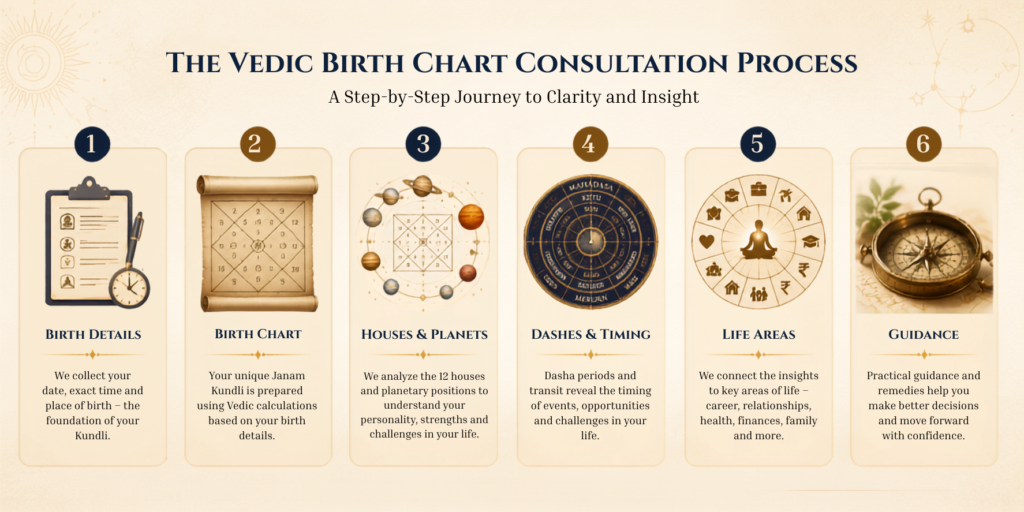
A consultation should ideally involve:
Accurate Birth Details
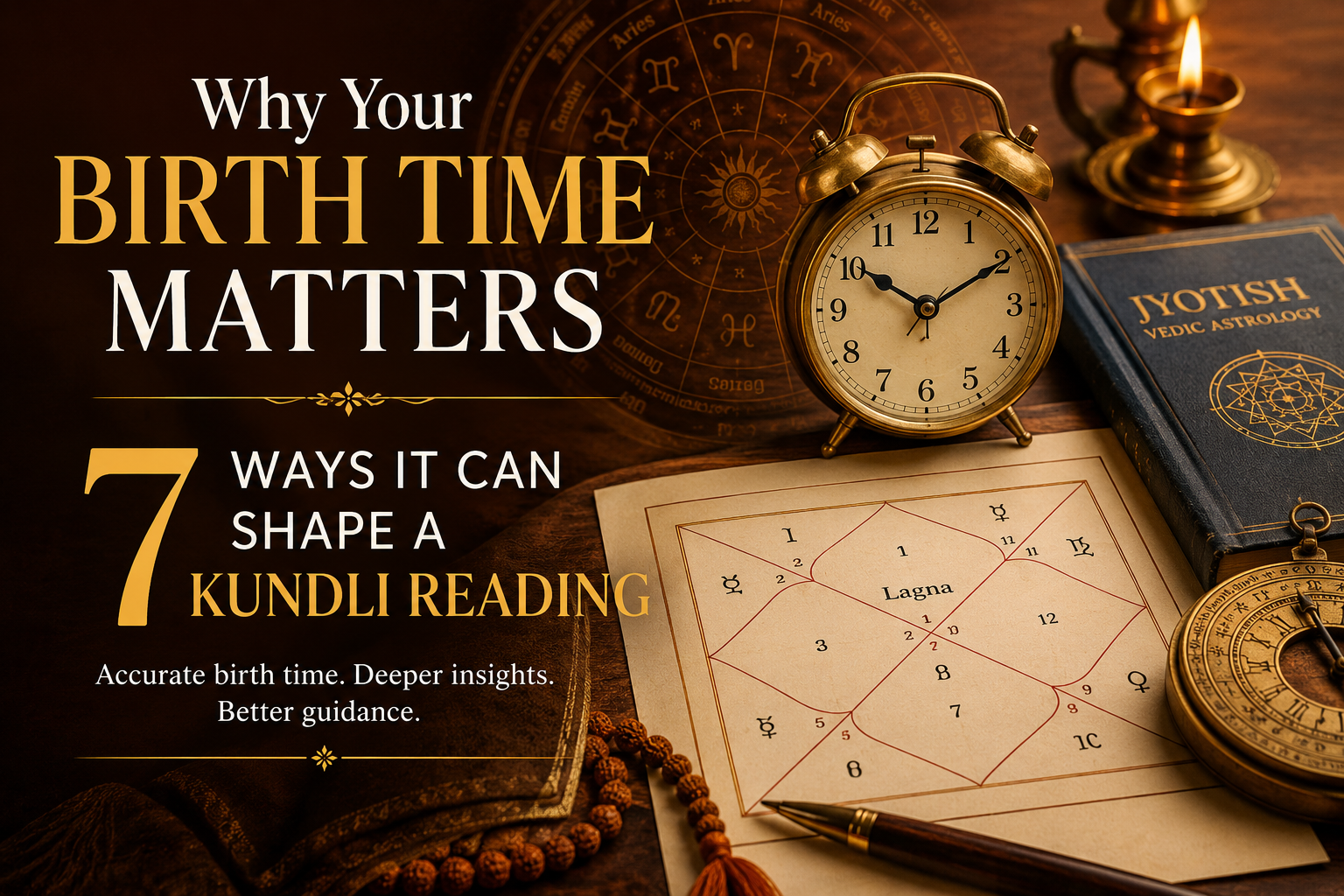
Your date, time and place of birth are important inputs for preparing a birth chart.
Clear Questions
Think about what you actually want to understand before your appointment.
Personal Context
Tell the astrologer what is happening in your life rather than expecting the chart to tell the entire story without context.
Understandable Explanations
You should be able to ask what a particular planetary position or timing technique means.
Balanced Guidance
Astrology should support your thinking rather than pressure you into decisions through fear.
What Should You Look for When Choosing an Astrologer in Sydney?
The phrase “best astrologer in Sydney” is subjective.
There is no universal ranking that can determine which practitioner is right for every person.
Instead, look for evidence of experience, transparency and a consultation style that makes you comfortable.
Here are five practical questions to ask.
How to Prepare for a Vedic Astrology Consultation
You don’t need to become an expert in astrology before speaking with an astrologer.
A little preparation can simply make the conversation more useful.
1. Confirm Your Birth Information
Try to provide your:
- date of birth
- exact or recorded birth time
- place of birth
If your birth time is uncertain, say so.
Do not simply guess a time because you think it will produce a better reading.
2. Write Down Your Main Questions
Instead of asking:
“Tell me my future.”
Try:
“I’d like to understand my career direction over the next phase of my life.”
A specific question generally creates a more useful conversation.
3. Bring Relevant Context
If you are asking about a career decision, explain the situation.
If you are asking about a relationship, explain what you are comfortable sharing.
The chart provides the astrological framework; your circumstances provide the human context.
4. Keep an Open but Practical Mind
You can be interested in astrology while still making decisions based on evidence, professional advice and your own judgement.
A Simple Look at What People May Want From an Astrology Consultation
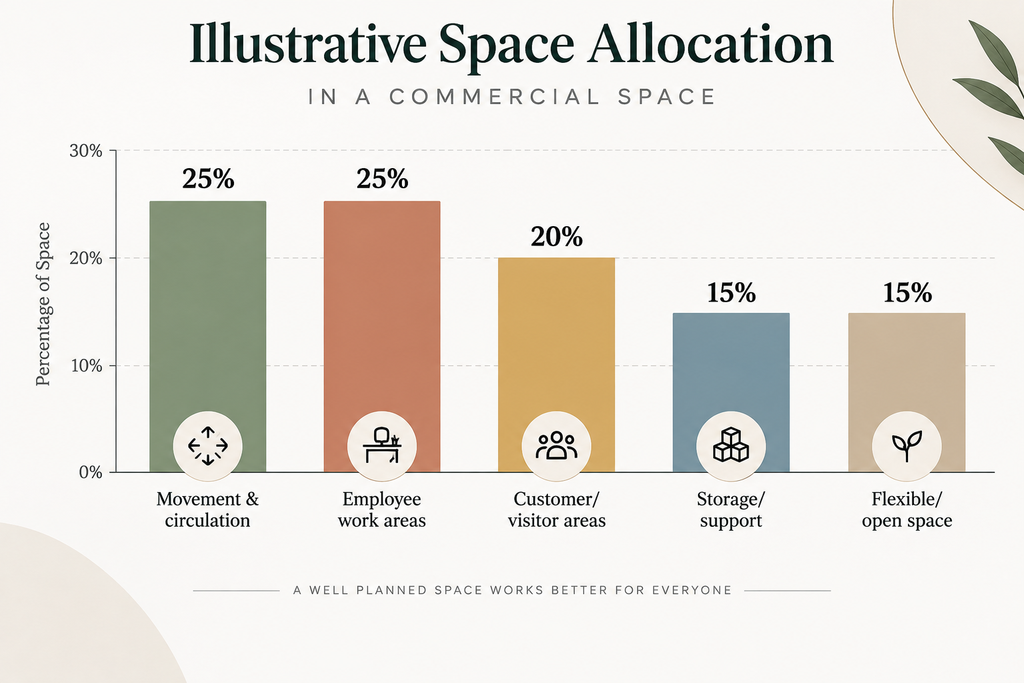
There is no reliable public dataset showing that a specific percentage of Sydney Indians consult astrologers for each life issue, so it would be misleading to invent statistics.
Consultation Focus

Why Aunkar Vastu?
Aunkar Vastu approaches astrology alongside its broader Vastu and numerology practice.
The business website identifies Acharya Oum Prakash Sharma as a professional Vastu consultant with more than 25 years of experience in Vastu Shastra, Astrology and Numerology. Its Sydney astrology service describes personalised birth-chart analysis and consultation for clients in Sydney and across Australia.
For someone considering an astrology consultation, the goal should not simply be to find the practitioner making the biggest promises.
It should be to find someone who:
- understands the tradition
- listens carefully
- explains their interpretation
- works with accurate birth details
- communicates without unnecessary fear
- respects personal choice
- provides guidance that is understandable and relevant
That is a much healthier way to approach astrology.
Why Are Sydney Indians Exploring Vedic Astrology?
The growing interest in Vedic astrology is not necessarily about wanting someone to predict every event that will happen in the future.
For many people, it is about something much simpler.
Understanding.
Understanding a difficult phase.
Understanding a major transition.
Understanding personal patterns.
Understanding timing.
Or simply taking a moment to ask, “Where am I going from here?”
For Sydney’s Indian community, Vedic astrology also offers a connection to a tradition that has travelled across generations and continents.
Whether someone approaches it as spirituality, culture, personal reflection or traditional guidance, the experience becomes more meaningful when it is personalised, transparent and grounded in the individual’s real circumstances.
If you’re considering a consultation, start with your question rather than with the prediction you hope to hear.
Sometimes, the most useful guidance is not an answer telling you exactly what to do.
It is a better understanding of what you are asking, why you are asking it, and what you want your next step to be.
Frequently Asked Questions
1. What is Vedic astrology and how is it different from a regular horoscope?
Vedic astrology, also known as Jyotish, is a traditional Indian astrological system that works with an individual’s birth details to construct and interpret a birth chart. A detailed reading can consider the Ascendant, Moon sign, houses, planetary positions, Nakshatras, Dashas, transits and other chart factors.
A regular horoscope, especially the short type commonly found online, may be based only on a person’s Sun sign. That makes it much more general.
A personalised Vedic astrology consultation looks at the individual’s chart rather than assuming everyone born under the same zodiac sign will experience life in exactly the same way.
2. Why do people in Sydney consult an astrologer?
People consult astrologers for many different reasons.
Some are interested in career and business decisions. Others want perspective on relationships, marriage, family matters or periods of personal uncertainty.
For Indian families living in Sydney, there can also be a cultural connection. Astrology may have been part of family conversations for generations, making it a familiar form of traditional guidance.
Others discover it later because they want another perspective during an important transition.
The reason for consulting is personal, but a good consultation should always begin by understanding what the individual actually wants to explore.
3. How should I choose the best Indian astrologer in Sydney?
There is no objective definition of the “best” astrologer for everyone.
Instead, look at the practitioner’s experience, approach and communication style.
Ask whether consultations are personalised, whether the astrologer explains the methods being used, whether they take your circumstances into account and whether they avoid fear-based claims.
You should also feel comfortable asking questions during the consultation.
A practitioner with a strong background should be able to explain their interpretation in language that a client can understand rather than simply listing technical astrological terms.
4. Can Vedic astrology help with career and relationship decisions?
People commonly seek astrological guidance around career, business and relationships because these areas involve uncertainty and important personal choices.
A Vedic astrology reading may examine relevant birth-chart factors and timing techniques to provide an astrological perspective.
However, it should not be treated as a guaranteed prediction or as a replacement for appropriate professional advice.
For example, someone making a financial decision should still consider financial information and qualified financial advice. Someone dealing with a legal matter should consult a legal professional.
Astrology can be one perspective among several rather than the sole basis for an important decision.
5. What information do I need before speaking with an astrologer in Sydney?
Ideally, have your date of birth, birth time and place of birth available.
The accuracy of the birth time can be particularly important because certain chart elements are time-sensitive. If you do not know your exact birth time, tell the astrologer rather than guessing.
It can also help to prepare two or three questions before the consultation.
For example, instead of simply asking “What is my future?”, you might ask about a particular career transition, relationship concern or period of uncertainty.
That gives the consultation a clear starting point.