>
loading

Category: Uncategorized

  • Home
  • Category: Uncategorized

Gemstone Astrology: How Vedic Astrologers Select the Right Gemstone Through Your Birth Chart

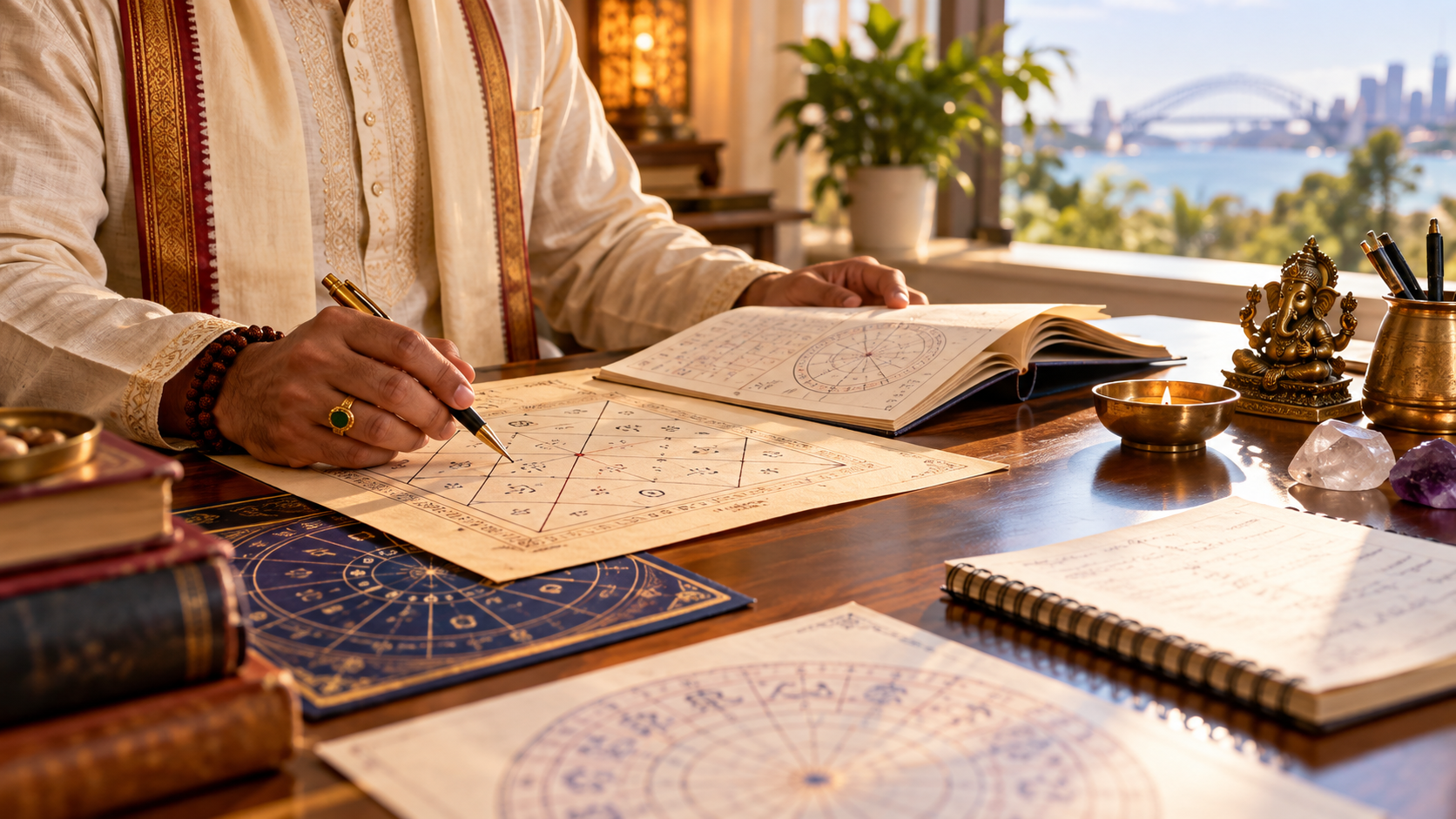
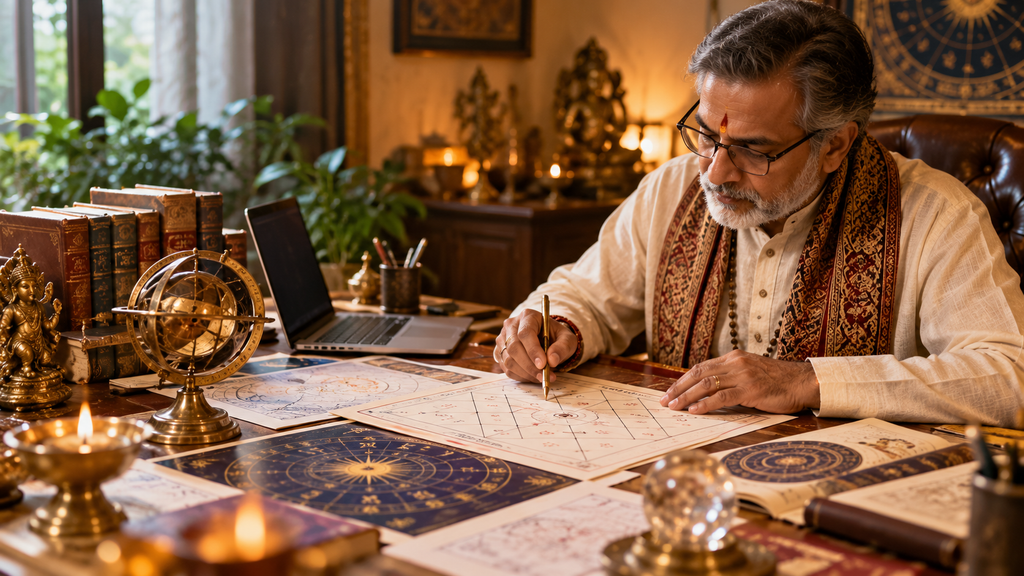
For thousands of years, gemstones have been an important part of Vedic astrology. In Jyotish Shastra, gemstones are considered connected with planetary energies and are traditionally recommended after analysing an individual’s birth chart.

However, choosing a gemstone is not simply about selecting a beautiful stone based on your zodiac sign. A professional Vedic astrologer studies multiple factors such as planetary positions, birth chart strength, planetary periods, and individual requirements before suggesting any gemstone.

People searching for an astrologer in Sydney often look for authentic Vedic guidance that combines traditional knowledge with personalised consultation. Understanding the process behind gemstone selection can help you make a more informed decision.

What Is Gemstone Astrology in Vedic Astrology?

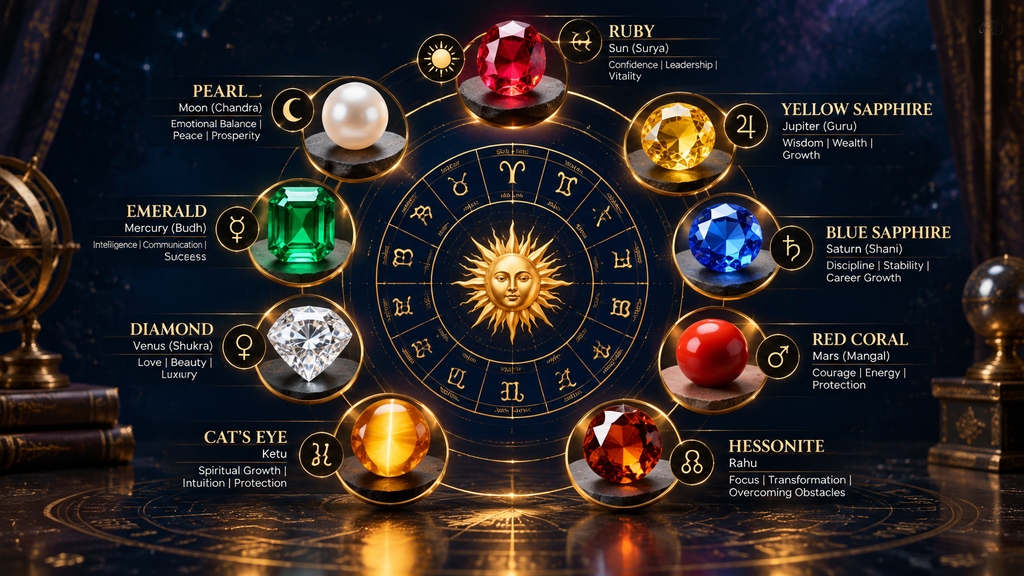
Gemstone astrology is a branch of Vedic astrology where specific gemstones are associated with planets mentioned in a person’s birth chart.

According to traditional Jyotish principles:

  • Ruby is associated with the Sun
  • Pearl is associated with the Moon
  • Red Coral is associated with Mars
  • Emerald is associated with Mercury
  • Yellow Sapphire is associated with Jupiter
  • Diamond is associated with Venus
  • Blue Sapphire is associated with Saturn
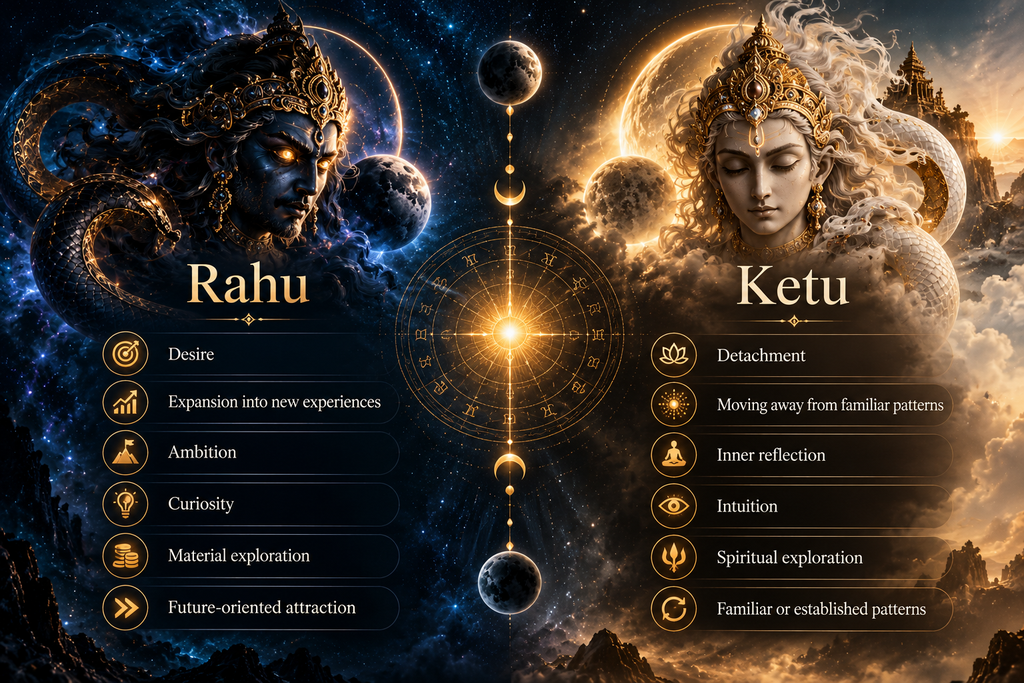
  • Hessonite is associated with Rahu
  • Cat’s Eye is associated with Ketu

A gemstone recommendation depends on whether strengthening a particular planetary influence is considered beneficial according to the birth chart.

How Do Vedic Astrologers Choose the Right Gemstone?

A common misconception is that gemstones are selected only according to zodiac signs.

In authentic Vedic astrology, astrologers analyse the complete birth chart before recommending a gemstone.

The process generally includes:

1. Birth Chart Analysis (Janam Kundli)

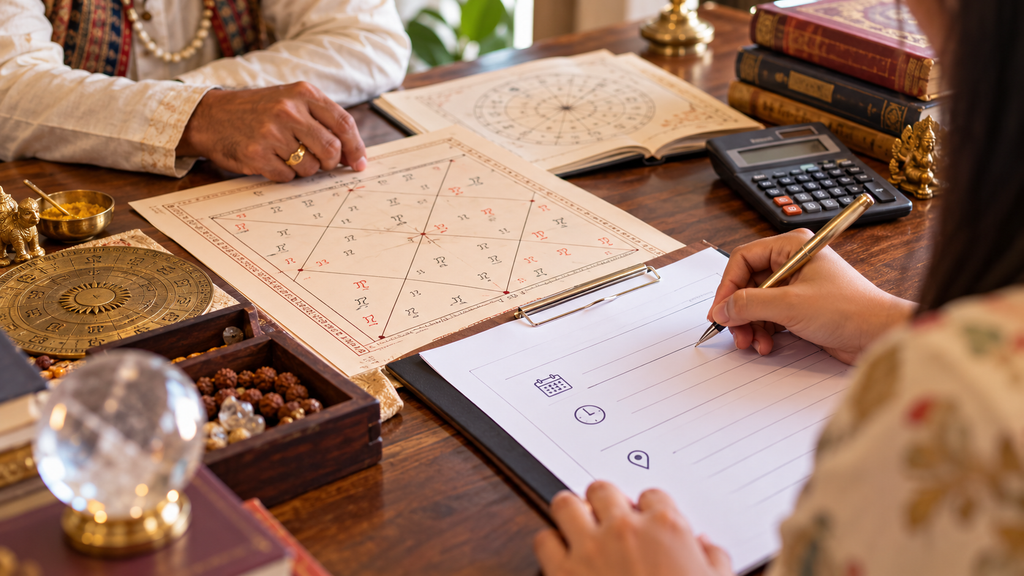
The first step involves preparing a person’s birth chart using:

  • Date of birth
  • Exact birth time
  • Birthplace

The astrologer studies:

  • Planetary positions
  • Houses
  • Zodiac signs
  • Ascendant (Lagna)
  • Planetary strengths

This helps understand which planets have importance in an individual’s chart.

2. Understanding Planetary Influence

Each gemstone is traditionally connected with a specific planet.

The astrologer evaluates whether a planet requires strengthening or balancing based on the chart.

3. Checking Planetary Periods (Dasha)

Vedic astrologers also consider planetary periods known as Dashas.

A gemstone recommendation may depend on:

  • Current Mahadasha
  • Antardasha
  • Planetary movements
  • Current life circumstances

This helps create a more personalised approach rather than following a general gemstone rule.

When Should Someone Consider Gemstone Astrology?

People usually explore gemstone astrology during important life phases.

Some common reasons include:

Career and Professional Growth

Individuals may seek guidance regarding:

  • Career transitions
  • Business decisions
  • Professional opportunities

Relationships and Marriage

Gemstone consultations may be considered alongside:

  • Marriage astrology
  • Compatibility analysis
  • Relationship guidance

Personal Development

Some people explore gemstones for:

  • Confidence
  • Focus
  • Self-awareness

Why Random Gemstone Selection May Not Be Helpful?

Many people purchase gemstones based only on:

  • Zodiac sign
  • Online recommendations
  • Social media trends

However, traditional Vedic astrology considers that every birth chart is unique.

The same gemstone may be interpreted differently depending on:

  • Planetary placement
  • House ownership
  • Strength of planets
  • Current planetary period

Therefore, personalised analysis is an important part of gemstone astrology.

How to Select a Reliable Vedic Astrologer for Gemstone Guidance?

When searching for the best Indian astrologer in Sydney, consider:

Experience in Vedic Astrology

A knowledgeable astrologer should understand classical Jyotish concepts.

Personalised Analysis

A proper consultation should involve birth chart analysis rather than generic recommendations.

Transparent Guidance

A professional astrologer explains:

  • Why a gemstone is recommended
  • How it relates to the chart
  • Traditional wearing methods

About Aunkar Vastu

Aunkar vastu provides authentic Vedic astrology consultations based on traditional Jyotish principles.

With experience in birth chart analysis, planetary interpretation, and personalised astrology guidance, the team helps individuals understand different aspects of their horoscope through structured consultations.

People looking for Vedic astrology Sydney services can explore personalised guidance based on their unique birth details.

Gemstone Selection Process Explained

FAQs

1. How does a Vedic astrologer choose the right gemstone?

A Vedic astrologer generally analyses the birth chart, planetary positions, ascendant, and current planetary periods before suggesting a gemstone according to traditional Jyotish practices.

2. Can I choose a gemstone based only on my zodiac sign?

While zodiac-based recommendations are common online, traditional Vedic astrology usually considers the complete birth chart because each person’s planetary placements are different.

3. When is the best time to consult an astrologer for gemstone guidance?

People often seek gemstone consultations during major life changes, career decisions, relationship concerns, or periods when they want deeper self-understanding.

4. Is gemstone astrology part of Vedic astrology?

Yes, gemstone recommendations are traditionally considered a part of Vedic astrology and are connected with planetary symbolism in Jyotish practices.

5. How can I find the best Indian astrologer in Sydney for gemstone consultation?

Look for an astrologer who provides personalised birth chart analysis, explains the reasoning behind recommendations, and follows authentic Vedic astrology principles.

7 Reasons Sydney Indians Are Turning to Vedic Astrology for Guidance

Moving to a new country can change more than your address.

For many Indians living in Sydney, life can feel like a constant balancing act. There is work to build, relationships to maintain, children to raise, financial decisions to make and, sometimes, the quiet pressure of staying connected to the traditions we grew up with.

That is one reason Vedic astrology continues to attract interest among Sydney’s Indian community.

For some people, it is deeply connected to family tradition. For others, it is something they discover later in life when they are facing a major decision and want another perspective before moving forward.

And increasingly, people are not necessarily looking for dramatic predictions about the future.

They want clarity.

They want to understand why a particular phase of life feels difficult, when it may be better to make an important decision, and how they can approach the situation with greater awareness.

This is where a personalised Vedic astrology consultation can feel very different from reading a generic horoscope online.

At Aunkar Vastu, astrology consultations are based on individual birth details and personalised interpretation. The practice is led by Acharya Oum Prakash Sharma, who states more than 25 years of experience in Vastu Shastra, Astrology and Numerology.

So, why are more Sydney Indians exploring this traditional form of guidance?

Let’s look at seven reasons.

1. Vedic Astrology Connects Modern Questions With an Indian Tradition

One of the simplest reasons people turn to Vedic astrology is familiarity.

For generations, Indian families have consulted astrologers for important milestones such as marriage, education, business, naming ceremonies and other major life decisions.

But living in Australia can create a different relationship with that tradition.

Someone who grew up hearing about Kundli from their parents may not have taken astrology seriously when they were younger. Years later, after moving to Sydney and experiencing the pressures of adult life, they may become curious about the tradition they once overlooked.

There is also something comforting about having a familiar cultural framework while living thousands of kilometres away from India.

Vedic astrology, or Jyotish, traditionally works with a birth chart calculated from details such as the date, time and place of birth. An astrologer may then examine elements including the Ascendant, Moon sign, planetary positions, houses, Nakshatras, Dashas and transits.

The important point is that a proper consultation is much more individual than a newspaper-style zodiac prediction.

Your birth chart belongs to your particular birth circumstances.

That personal element is one reason people looking for an astrologer in Sydney may prefer a consultation that begins with their own questions rather than a generic prediction.

2. Sydney Life Comes With Decisions That Don’t Always Have Easy Answers

Life in Sydney can be exciting, but it can also involve some very practical uncertainties.

Should you change careers?

Is it the right time to start a business?

Should you move to another suburb?

Are you ready for marriage?

Should you wait before making a major investment?

Should you relocate again?

These are not questions with simple yes-or-no answers.

Astrology does not need to replace practical decision-making to be useful to someone who believes in it. Instead, many people approach it as another perspective through which they can reflect on their circumstances.

For example, someone considering a career change may already have the practical information they need: salary, industry outlook, location and responsibilities.

An astrology consultation may address a different question:

“Does this period of my life appear supportive for change, and what should I be mindful of?”

That distinction is important.

A thoughtful astrologer should not encourage someone to ignore professional, financial, legal or medical advice. Rather, astrology can sit alongside normal decision-making as a personal or spiritual framework.

3. People Want More Than Generic Horoscope Predictions

Open any social media platform and you will find astrology content.

“Three zodiac signs will get good news this month.”

“Your lucky day is Friday.”

“Someone from your past may return.”

It can be entertaining, but it is not the same as a personalised birth-chart consultation.

One of the reasons people search for the best astrologer in Sydney is that they want someone to look at their circumstances.

A personalised reading can start with a specific concern.

For instance:

  • “Why have I been experiencing repeated career changes?”
  • “What does my Kundli say about marriage?”
  • “Why does this period feel unusually demanding?”
  • “Is this a suitable time to consider a business?”
  • “How can I understand the timing shown in my chart?”

These questions require context.

A good consultation should also allow the client to ask questions and understand what the astrologer is interpreting.

That conversation is often more valuable than simply being given a list of predictions.

4. Career and Business Decisions Are a Major Reason People Seek Guidance

Career uncertainty is one of the most common areas in which people look for additional perspective.

Sydney has a broad employment and business landscape, and many Indian professionals are building careers across technology, healthcare, finance, education, construction, hospitality and entrepreneurship.

Career decisions can therefore become complicated.

You may be doing well professionally but wondering whether you should take the next step.

Or perhaps you have recently changed industries and want to understand the new phase of your life.

Vedic astrology traditionally gives considerable attention to career-related houses, planetary combinations and timing techniques.

An astrologer may study the birth chart alongside planetary periods and transits to develop an interpretation around professional themes and timing.

The value for the client is not necessarily hearing a guaranteed prediction.

It can be having a structured conversation around:

Where am I now?

What themes appear in my chart?

What period am I moving through?

What should I approach carefully?

Where might opportunities require more attention?

This is also where choosing an experienced practitioner becomes important.

A chart can contain a large amount of information. The skill lies in interpreting it coherently rather than overwhelming someone with technical terminology.

5. Relationships and Marriage Remain Important Areas of Interest

Marriage has traditionally been an important area of Indian astrology, and that interest has not disappeared simply because families have moved overseas.

In fact, living abroad can sometimes make relationship decisions more complicated.

People may be balancing:

  • family expectations
  • personal compatibility
  • cultural differences
  • long-distance relationships
  • career priorities
  • different approaches to marriage
  • questions about timing

A Vedic astrology consultation may involve examining individual birth charts and, where appropriate, compatibility-related factors.

But there is an important distinction between guidance and certainty.

Astrology should not be presented as a guarantee that a relationship will succeed or fail.

A responsible consultation should encourage people to consider communication, values, compatibility and real-life circumstances alongside any astrological interpretation.

This is one reason people searching for a best Indian astrologer in Sydney should look beyond marketing claims.

Ask yourself:

Does the practitioner explain their reasoning?

Do they listen to your circumstances?

Do they avoid fear-based predictions?

Do they respect your ability to make your own decisions?

Those questions can tell you much more than a “number one” label.

6. People Are Interested in Timing  Not Just Prediction

This is perhaps one of the more distinctive aspects of Vedic astrology.

People are often less interested in knowing what will happen than they are in understanding when certain themes may become more prominent.

Vedic astrology uses timing techniques such as planetary Dashas and transits.

The idea is that different planetary periods can correspond with different themes and experiences in a person’s life.

For someone unfamiliar with Jyotish, this can be easier to understand through a simple example.

Imagine that you have been considering a business decision for several months.

You might ask:

“Should I do it?”

A more useful astrological question could be:

“What does my current planetary period suggest about this phase, and what factors should I consider before moving ahead?”

That creates room for interpretation rather than a simplistic yes-or-no answer.

It also explains why a detailed consultation can be quite different from checking a daily horoscope.

7. It Gives People Space to Pause, Reflect and Ask Better Questions

Perhaps the most human reason people seek an astrology consultation has nothing to do with predicting the future.

Sometimes, people simply need to stop.

Modern life moves quickly. Between work, family, commuting, finances and social commitments, there is not always much time to step back and think about where life is heading.

A consultation can create that pause.

Sitting down with someone and talking through your birth chart, concerns and current circumstances can encourage you to look at your situation differently.

For some people, that process is spiritual.

For others, it is cultural.

For others, it is simply reflective.

And that difference is perfectly fine.

The usefulness of an astrology consultation does not have to depend on treating every prediction as certain.

It can also come from asking better questions about your own life.

How Vedic Astrology Sydney Consultations Can Be More Personal

One of the biggest differences between online astrology content and a professional consultation is context.

A search engine can tell you what a particular zodiac sign supposedly means.

It cannot have a conversation with you about why you are considering leaving your job, how long you have been experiencing uncertainty or what other factors are influencing your decision.

A personal consultation can begin there.

At Aunkar Vastu, the Sydney astrology service describes individual birth-chart analysis and personalised guidance relating to areas such as career, relationships and finances.

That approach is worth considering when choosing a practitioner.

A consultation should ideally involve:

Accurate Birth Details

Your date, time and place of birth are important inputs for preparing a birth chart.

Clear Questions

Think about what you actually want to understand before your appointment.

Personal Context

Tell the astrologer what is happening in your life rather than expecting the chart to tell the entire story without context.

Understandable Explanations

You should be able to ask what a particular planetary position or timing technique means.

Balanced Guidance

Astrology should support your thinking rather than pressure you into decisions through fear.

What Should You Look for When Choosing an Astrologer in Sydney?

The phrase “best astrologer in Sydney” is subjective.

There is no universal ranking that can determine which practitioner is right for every person.

Instead, look for evidence of experience, transparency and a consultation style that makes you comfortable.

Here are five practical questions to ask.

How to Prepare for a Vedic Astrology Consultation

You don’t need to become an expert in astrology before speaking with an astrologer.

A little preparation can simply make the conversation more useful.

1. Confirm Your Birth Information

Try to provide your:

  • date of birth
  • exact or recorded birth time
  • place of birth

If your birth time is uncertain, say so.

Do not simply guess a time because you think it will produce a better reading.

2. Write Down Your Main Questions

Instead of asking:

“Tell me my future.”

Try:

“I’d like to understand my career direction over the next phase of my life.”

A specific question generally creates a more useful conversation.

3. Bring Relevant Context

If you are asking about a career decision, explain the situation.

If you are asking about a relationship, explain what you are comfortable sharing.

The chart provides the astrological framework; your circumstances provide the human context.

4. Keep an Open but Practical Mind

You can be interested in astrology while still making decisions based on evidence, professional advice and your own judgement.

A Simple Look at What People May Want From an Astrology Consultation

There is no reliable public dataset showing that a specific percentage of Sydney Indians consult astrologers for each life issue, so it would be misleading to invent statistics.

Consultation Focus


Why Aunkar Vastu?

Aunkar Vastu approaches astrology alongside its broader Vastu and numerology practice.

The business website identifies Acharya Oum Prakash Sharma as a professional Vastu consultant with more than 25 years of experience in Vastu Shastra, Astrology and Numerology. Its Sydney astrology service describes personalised birth-chart analysis and consultation for clients in Sydney and across Australia.

For someone considering an astrology consultation, the goal should not simply be to find the practitioner making the biggest promises.

It should be to find someone who:

  • understands the tradition
  • listens carefully
  • explains their interpretation
  • works with accurate birth details
  • communicates without unnecessary fear
  • respects personal choice
  • provides guidance that is understandable and relevant

That is a much healthier way to approach astrology.

Why Are Sydney Indians Exploring Vedic Astrology?

The growing interest in Vedic astrology is not necessarily about wanting someone to predict every event that will happen in the future.

For many people, it is about something much simpler.

Understanding.

Understanding a difficult phase.

Understanding a major transition.

Understanding personal patterns.

Understanding timing.

Or simply taking a moment to ask, “Where am I going from here?”

For Sydney’s Indian community, Vedic astrology also offers a connection to a tradition that has travelled across generations and continents.

Whether someone approaches it as spirituality, culture, personal reflection or traditional guidance, the experience becomes more meaningful when it is personalised, transparent and grounded in the individual’s real circumstances.

If you’re considering a consultation, start with your question rather than with the prediction you hope to hear.

Sometimes, the most useful guidance is not an answer telling you exactly what to do.

It is a better understanding of what you are asking, why you are asking it, and what you want your next step to be.

Frequently Asked Questions

1. What is Vedic astrology and how is it different from a regular horoscope?

Vedic astrology, also known as Jyotish, is a traditional Indian astrological system that works with an individual’s birth details to construct and interpret a birth chart. A detailed reading can consider the Ascendant, Moon sign, houses, planetary positions, Nakshatras, Dashas, transits and other chart factors.

A regular horoscope, especially the short type commonly found online, may be based only on a person’s Sun sign. That makes it much more general.

A personalised Vedic astrology consultation looks at the individual’s chart rather than assuming everyone born under the same zodiac sign will experience life in exactly the same way.

2. Why do people in Sydney consult an astrologer?

People consult astrologers for many different reasons.

Some are interested in career and business decisions. Others want perspective on relationships, marriage, family matters or periods of personal uncertainty.

For Indian families living in Sydney, there can also be a cultural connection. Astrology may have been part of family conversations for generations, making it a familiar form of traditional guidance.

Others discover it later because they want another perspective during an important transition.

The reason for consulting is personal, but a good consultation should always begin by understanding what the individual actually wants to explore.

3. How should I choose the best Indian astrologer in Sydney?

There is no objective definition of the “best” astrologer for everyone.

Instead, look at the practitioner’s experience, approach and communication style.

Ask whether consultations are personalised, whether the astrologer explains the methods being used, whether they take your circumstances into account and whether they avoid fear-based claims.

You should also feel comfortable asking questions during the consultation.

A practitioner with a strong background should be able to explain their interpretation in language that a client can understand rather than simply listing technical astrological terms.

4. Can Vedic astrology help with career and relationship decisions?

People commonly seek astrological guidance around career, business and relationships because these areas involve uncertainty and important personal choices.

A Vedic astrology reading may examine relevant birth-chart factors and timing techniques to provide an astrological perspective.

However, it should not be treated as a guaranteed prediction or as a replacement for appropriate professional advice.

For example, someone making a financial decision should still consider financial information and qualified financial advice. Someone dealing with a legal matter should consult a legal professional.

Astrology can be one perspective among several rather than the sole basis for an important decision.

5. What information do I need before speaking with an astrologer in Sydney?

Ideally, have your date of birth, birth time and place of birth available.

The accuracy of the birth time can be particularly important because certain chart elements are time-sensitive. If you do not know your exact birth time, tell the astrologer rather than guessing.

It can also help to prepare two or three questions before the consultation.

For example, instead of simply asking “What is my future?”, you might ask about a particular career transition, relationship concern or period of uncertainty.

That gives the consultation a clear starting point.

Vedic Astrology vs Western Astrology: Which One Is More Accurate?in

Two Astrological Systems, One Big Question

Have you ever checked your zodiac sign on two different astrology websites and received two different answers?

You are not alone.

One system may tell you that you are a Leo, while another may place you in Cancer. One astrologer may focus heavily on your Sun sign, while another begins with your Moon sign, Ascendant, Nakshatras and planetary periods.

This often leads to one question:

Which astrology is actually more accurate  Vedic or Western?

The answer is more nuanced than simply choosing one over the other.

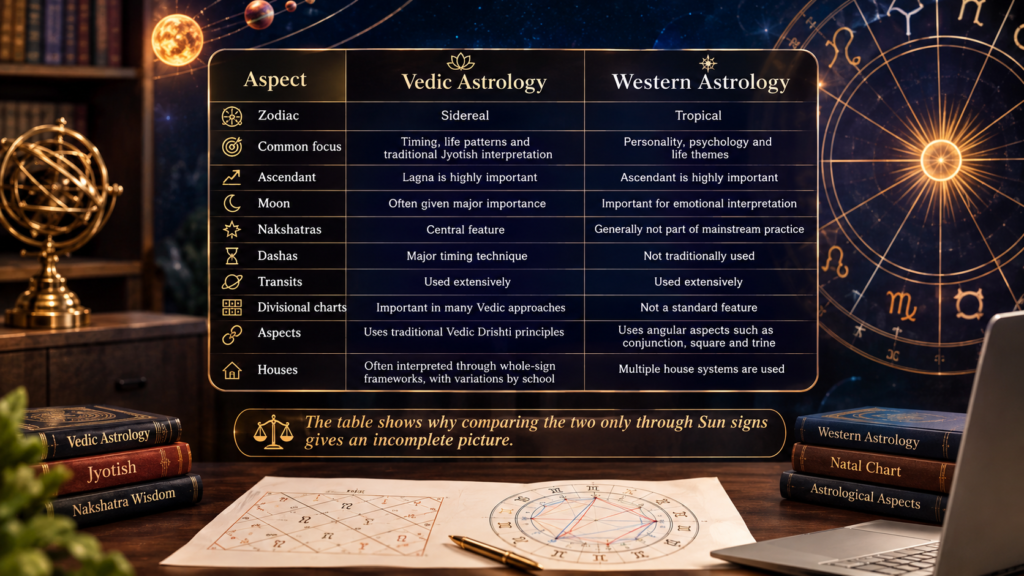
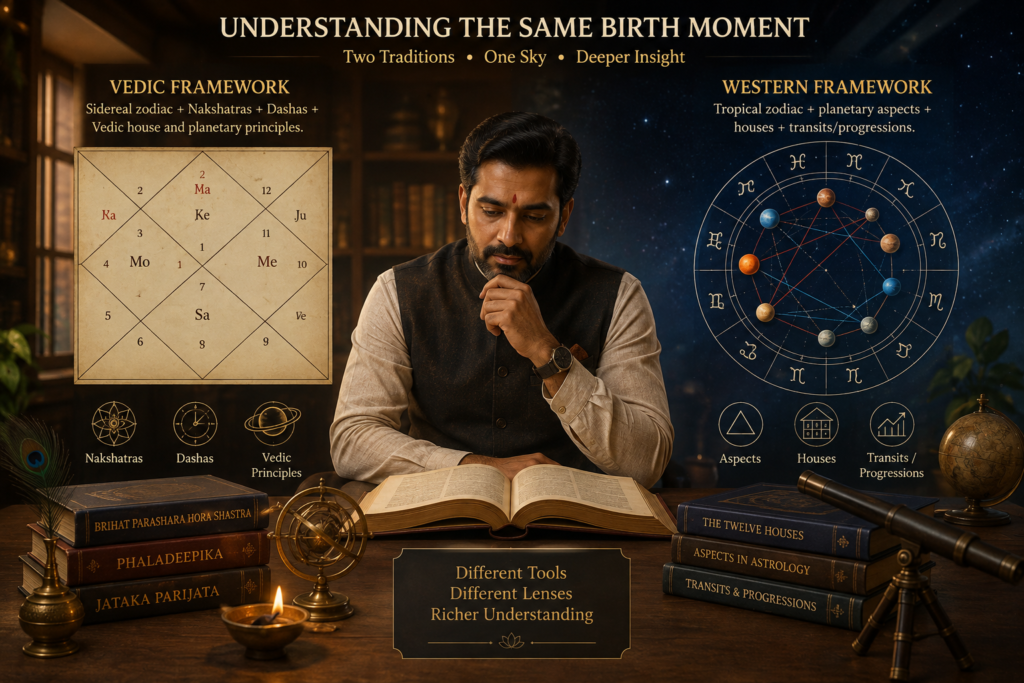
Vedic astrology and Western astrology use different frameworks for interpreting the same sky. They differ in their zodiac reference points, chart calculations, interpretive techniques and approaches to timing.

Best Vedic astrologer , traditionally known as Jyotish, uses a sidereal zodiac, while mainstream Western astrology generally uses a tropical zodiac. Because of the Earth’s axial precession, the two systems are currently separated by roughly 23–24 degrees, depending on the ayanamsa and calculation method used.

That difference can change the zodiac sign in which a planet appears.

But does that automatically make one system more accurate?

Not necessarily.

A better question is:

Which system is more appropriate for the kind of question you want answered?

That is where the real comparison begins.

What Is Vedic Astrology?

Vedic astrology, or Jyotish, is an Indian astrological tradition that analyses the positions of celestial bodies at the time of birth.

A detailed reading can consider several components, including:

  • Ascendant or Lagna
  • Moon sign or Rashi
  • Planetary positions
  • Houses
  • Nakshatras
  • Planetary aspects
  • Dashas
  • Transits
  • Divisional charts
  • Yogas

One of the important features of the system is its emphasis on timing.

For example, Vedic astrologers may use planetary periods such as Vimshottari Dasha alongside transits to examine when particular themes may become more prominent.

This makes a Vedic birth-chart reading considerably more detailed than the basic daily horoscope most people encounter online.

For people looking for personalised guidance, the quality of interpretation also matters. A chart is not simply a collection of planetary positions; its meaning depends on how the different elements interact.

Aunkar Vastu, for example, describes its approach as combining birth-chart analysis, planetary positions and personalised recommendations rather than relying only on generic zodiac advice.

What Is Western Astrology?

Western astrology is a broad tradition with many schools and approaches.

Modern Western astrology commonly uses the tropical zodiac, which is linked to the seasonal cycle. In this framework, 0° Aries is associated with the vernal equinox rather than being permanently aligned with the present-day astronomical constellation of Aries.

Western astrology can examine:

  • Sun sign
  • Moon sign
  • Ascendant
  • Houses
  • Planetary aspects
  • Transits
  • Progressions
  • Retrogrades
  • Chart patterns

Many contemporary Western astrologers place considerable emphasis on personality, psychological patterns, emotional behaviour and self-understanding.

However, it is important not to reduce Western astrology to “Sun signs.”

A professional Western natal-chart reading can involve the entire chart and considerably more detail than the familiar horoscope column.

Vedic Astrology vs Western Astrology: The Fundamental Difference

The biggest technical difference is the zodiac reference system.

Vedic Astrology Uses the Sidereal Zodiac

The sidereal approach attempts to maintain a relationship between zodiacal positions and the stellar background.

Because Earth’s rotational axis slowly changes orientation, the equinoxes gradually shift relative to the background stars. This phenomenon is known as precession of the equinoxes.

Vedic astrology accounts for this through an ayanamsa, with different schools using different calculations.

Western Astrology Uses the Tropical Zodiac

The tropical zodiac is anchored to the seasonal cycle.

The beginning of Aries is tied to the vernal equinox, so the zodiac remains seasonally fixed even though the background constellations gradually shift because of precession.

Neither approach is simply a “wrong calculation.”

They are based on different reference frameworks.

That distinction is essential when comparing the two.

Why Does Your Zodiac Sign Change in Vedic and Western Astrology?

This is probably the most common source of confusion.

Suppose your Western birth chart places your Sun at a particular degree of a zodiac sign.

When the same birth data is calculated using a sidereal system, the position may shift backward by approximately 23–24 degrees.

As a result, someone who identifies with one Western Sun sign may have the previous sign as their Vedic Sun sign.

This does not mean that one astrologer made a mistake.

It means the two charts are using different zodiac reference points.

The difference is connected to precession and is commonly described through the term ayanamsa in Vedic astrology.

Example

Imagine a person’s tropical Sun is at 10° Taurus.

Using a sidereal calculation with an ayanamsa of approximately 24°, the Sun would fall around 16° Aries.

So:

Western: Taurus
Vedic: Aries

The person’s birth details have not changed.

The planets have not changed.

The reference system has changed.


What Makes Vedic Astrology Different?

1. The Importance of the Moon Sign

In Vedic astrology, the Moon can have a particularly important role in understanding the mind, emotional tendencies, habits and lived experience.

This is one reason a person’s Vedic reading may seem very different from a simple Western Sun-sign horoscope.

A serious interpretation normally looks at the chart as a whole rather than relying on one placement.

2. Nakshatras Add Another Layer

Vedic astrology divides the zodiac into 27 Nakshatras, or lunar mansions.

Each Nakshatra is further divided into four padas.

This creates a finer interpretive layer than simply assigning someone to one of twelve zodiac signs.

For practitioners who use Nakshatras extensively, this can provide additional context when examining personality patterns and planetary placements.

3. Dashas Introduce a Timing Framework

One of the most distinctive features of Jyotish is the use of planetary periods known as Dashas.

Vimshottari Dasha is one of the best-known systems.

Rather than asking only:

“What does this planet represent?”

the astrologer can also ask:

“When does this planetary influence become especially relevant?”

This timing dimension is one of the reasons people often seek a Vedic consultation for questions involving career changes, relationships, major decisions or different phases of life.

How Western Astrology Approaches Personality and Psychology

Western astrology often places strong emphasis on the psychological interpretation of a natal chart.

For example, an astrologer may examine:

  • Sun for identity and self-expression
  • Moon for emotional responses
  • Mercury for communication
  • Venus for relationships and values
  • Mars for action and motivation
  • Saturn for responsibility and limitations
  • Outer planets for broader psychological and generational themes

The relationship between planets is also important.

A square, trine, opposition or conjunction can be interpreted as part of a person’s broader psychological and behavioural pattern.

This makes Western astrology particularly attractive to people interested in self-reflection and personality analysis.

Which One Is More Accurate: Vedic or Western Astrology?

This is where a responsible answer matters.

There is no universally established scientific test showing that one astrological tradition is objectively more accurate than the other for predicting a person’s future.

Therefore, it would be misleading to claim that Vedic astrology is always more accurate or that Western astrology is always more accurate.

Within astrology itself, practitioners judge accuracy according to different criteria.

For example:

  • A person may find Vedic timing techniques useful.
  • Someone else may find Western psychological interpretations more relatable.
  • Another person may appreciate both approaches.
  • The astrologer’s training and interpretation may matter as much as the system being used.

The strongest comparison is therefore not:

Vedic = accurate / Western = inaccurate

but:

Vedic and Western astrology answer questions through different frameworks.

When Is Vedic Astrology More Useful?

Vedic astrology may be particularly appealing when someone wants a structured birth-chart analysis involving:

  • Life periods
  • Planetary Dashas
  • Nakshatras
  • Marriage compatibility
  • Career direction
  • Traditional remedies
  • Timing of important decisions
  • Detailed Kundli interpretation

For example, someone asking:

“What major planetary period am I currently experiencing?”

is asking a question that fits naturally within the Dasha framework.

Likewise, someone interested in traditional Kundli matching may prefer a Vedic approach.

When Is Western Astrology More Useful?

Western astrology may appeal more to someone interested in:

  • Personality
  • Emotional patterns
  • Psychological self-understanding
  • Relationship dynamics
  • Personal development
  • Natal chart symbolism
  • Transits and progressions

Someone asking:

“Why do I respond emotionally to situations in this particular way?”

may find a psychologically oriented Western reading especially interesting.

Of course, these are tendencies rather than strict rules. Different astrologers within each tradition use different techniques.


Can Vedic and Western Astrology Be Used Together?

Yes, but they should not be mixed carelessly.

A common mistake is to take a Vedic chart and interpret it using Western rules, or take a Western chart and apply Vedic techniques without understanding the underlying framework.

A better approach is to understand each system on its own terms.

For example:

Why the Astrologer Matters as Much as the System

People sometimes spend too much time asking:

“Which system is the best?”

and not enough time asking:

“Who is interpreting the chart?”

Two astrologers can use the same system and reach different conclusions because interpretation involves experience, methodology and context.

A good consultation should involve:

  • Accurate birth details
  • A clear explanation of the method
  • Personalised interpretation
  • Context about the person’s circumstances
  • Balanced communication
  • No unnecessary fear
  • Practical guidance
  • Respect for the client’s decisions

Aunkar Vastu states that its astrology services are personalised around individual birth details and life circumstances, with an emphasis on practical guidance.

How to Choose the Right Astrology System for You

Instead of choosing based on which system sounds more impressive, start with your question.

If your question is about timing

You may want to explore Vedic astrology and its planetary-period techniques.

If your question is about personality

A detailed Western natal-chart interpretation may be useful.

If you want traditional Indian astrology

Look for an experienced practitioner trained in Jyotish rather than someone who only provides generic Sun-sign readings.

If you want both

Ask whether the astrologer clearly distinguishes between the two systems rather than blending terminology without explanation.

How to Find a Good Vedic Astrologer

Searching online for the best indian vedic astrologer can produce a long list of results, but ranking alone should not determine your choice.

Look for:

  1. Experience and training
    Understand the practitioner’s background and areas of expertise.
  2. Personalised consultations
    A genuine reading should be based on your birth details rather than generic zodiac content.
  3. Clear methodology
    The astrologer should be able to explain what techniques are being used.
  4. Practical communication
    Guidance should be understandable rather than filled with unexplained terminology.
  5. No fear-based selling
    Be cautious of anyone who uses alarming predictions to pressure you into expensive remedies or services.
  6. Respect for personal choice
    Astrology should support reflection and decision-making, not replace your judgement.

Aunkar Vastu presents itself as an Australia-based provider of Vedic astrology and Astro Vastu consultations, including services across Melbourne, Sydney, Brisbane and Adelaide.


What About Accuracy in Astrology?

The word “accuracy” needs to be defined before comparing systems.

Accuracy could mean:

  • A personality description feels relevant.
  • A past event appears to match a chart interpretation.
  • A timing technique identifies a meaningful period.
  • A consultation provides useful perspective.
  • A prediction appears to correspond with a later event.

These are different standards.

From a scientific perspective, astrology should not be presented as a proven method for predicting future events with certainty.

From an astrological perspective, practitioners evaluate charts according to the rules and traditions of their particular school.

That distinction allows readers to explore astrology without making claims that go beyond the available evidence.

A Simple Comparison Using Three Questions

Think of the comparison this way:

Question 1: “Who am I?”

Western astrology can provide an extensive psychological interpretation through the natal chart.

Question 2: “What patterns are visible in my life?”

Both systems can approach this question, but they may use different calculations and interpretive principles.

Question 3: “When might a particular life phase become more prominent?”

Vedic astrology has a particularly structured answer through planetary-period systems such as Dashas.

This does not make one universally superior.

It shows that the systems have different strengths.

Vedic Astrology vs Western Astrology: Which Should You Choose?

There is no need to treat the choice as a competition.

If you are interested in traditional Indian astrology, Kundli analysis, Nakshatras, Dashas and timing techniques, Vedic astrology may be the better starting point.

If you are primarily interested in personality, emotional patterns and psychological interpretation, Western astrology may appeal more strongly.

And if you are curious about both, comparing them can be an interesting way to understand how different traditions interpret the same birth data.

The most important factor is not simply whether an astrologer calls themselves Vedic or Western.

It is whether they understand their chosen system, explain it responsibly and provide an interpretation that is genuinely personalised.

Is Vedic Astrology More Accurate Than Western Astrology?

Not in a way that can be universally established.

Vedic and Western astrology use different zodiac frameworks and interpretive traditions. Vedic astrology uses a sidereal framework and includes distinctive tools such as Nakshatras and Dashas, while Western astrology generally uses the tropical zodiac and has developed extensive psychological and aspect-based approaches.

So instead of asking:

“Which one is more accurate?”

ask:

“Which system is better suited to the question I want to explore?”

That shift makes the comparison much more useful.

If you are looking for personalised Vedic guidance, choosing an experienced practitioner who explains the methodology, considers your complete chart and avoids generic predictions is more important than simply choosing someone because they appear high in search results.

For readers exploring personalised Vedic astrology and Astro Vastu services in Australia, Aunkar Vastu offers consultations based on individual birth details and astrological analysis.

Frequently Asked Questions

1. How is Vedic astrology different from Western astrology?

Vedic astrology generally uses a sidereal zodiac, while Western astrology generally uses a tropical zodiac. Vedic astrology also incorporates techniques such as Nakshatras, Dashas and divisional charts that are not standard features of mainstream Western astrology. Western astrology often places greater emphasis on psychological interpretation, planetary aspects and transits.

The difference does not mean that one system is automatically correct and the other is incorrect. They begin with different reference frameworks and have developed different interpretive traditions.

2. Why is my Vedic zodiac sign different from my Western zodiac sign?

Your sign may change because the two systems use different zodiac reference points.

Western astrology generally uses the tropical zodiac, which is tied to the seasonal equinoxes. Vedic astrology generally uses a sidereal zodiac that accounts for the gradual shift between the seasonal reference point and the stellar background.

The resulting difference is commonly around 23–24 degrees today, depending on the ayanamsa used.

So if your Western Sun is near the beginning of a sign, your Vedic Sun may fall in the previous sign.

3. When should I choose a Vedic astrologer instead of a Western astrologer?

Consider your purpose.

If you are interested in traditional Jyotish, Kundli interpretation, Nakshatras, Dashas, marriage matching or timing-oriented analysis, a practitioner trained in Vedic astrology may be more appropriate.

If your primary interest is psychological self-understanding, personality patterns and modern Western natal-chart interpretation, a Western astrologer may be a better fit.

The best choice ultimately depends on what you want to understand.

4. Why do people consider Vedic astrology highly detailed?

One reason is the number of layers that can be incorporated into a Vedic reading.

Depending on the practitioner’s school, an analysis may consider the Ascendant, Moon sign, planetary placements, houses, Nakshatras, Dashas, transits, yogas and divisional charts.

This creates a more detailed interpretive framework than a basic Sun-sign horoscope.

However, greater detail does not automatically mean greater predictive certainty. The quality of interpretation and the limits of astrological claims should still be considered.

5. How do I find the best Indian Vedic astrologer for a personal consultation?

Rather than choosing an astrologer solely because a website uses the phrase “best Indian Vedic astrologer,” evaluate the actual quality of the service.

Check:

  • The astrologer’s experience and background
  • Whether consultations are personalised
  • Whether the methodology is explained
  • Whether birth details are properly considered
  • Reviews and testimonials where available
  • Whether recommendations are practical
  • Whether the consultation avoids fear-based claims
  • Whether the astrologer respects your ability to make your own decisions

A good consultation should leave you with greater understanding and clarity, not unnecessary fear.

For people in Australia exploring Vedic astrology, Aunkar Vastu offers personalised astrology services and describes its approach as combining traditional astrology with practical guidance.

Building Efficient, Sustainable & Profitable Industrial Spaces

Industrial parks are designed to bring multiple businesses together under one well-planned ecosystem. While infrastructure, transportation, and utilities receive significant attention during planning, one important factor is often overlooked the way the site itself influences efficiency, employee wellbeing, and long-term business performance.

This is where Industrial Vastu Shastra becomes valuable.

Rather than being viewed simply as a traditional practice, Vastu today is increasingly considered during industrial planning because it focuses on creating logical layouts, smooth movement, balanced space utilization, and environments that support productivity.

At Aunkar Vastu, we help industrial developers, factory owners, and manufacturing businesses across Australia plan industrial spaces that combine modern engineering with time-tested Vastu principles.

What is Industrial Vastu Shastra?

Industrial Vastu Shastra is the science of planning industrial buildings according to directional balance, functional zoning, natural energy flow, and efficient operational movement.

Unlike residential Vastu, industrial planning involves:

  • Large manufacturing units
  • Warehouses
  • Distribution centers
  • Multiple factories
  • Utility areas
  • Heavy machinery
  • Employee facilities
  • Loading and unloading zones

The objective is to create an environment where operations flow smoothly, resources are utilized efficiently, and unnecessary obstacles are minimized.

When integrated during the planning stage, Vastu recommendations can complement engineering, architecture, and operational requirements rather than interfere with them.

Why Vastu for Industrial Parks Matters

Industrial parks accommodate numerous businesses operating simultaneously. Poor planning may result in traffic congestion, inefficient movement of goods, operational bottlenecks, and underutilized spaces.

A thoughtfully planned industrial layout supports:

  • Better internal logistics
  • Organized movement of heavy vehicles
  • Efficient production flow
  • Safer working environments
  • Improved natural lighting
  • Enhanced employee comfort
  • Better future expansion opportunities

These practical advantages align closely with Vastu principles, making the approach relevant even for modern industrial developments.

Key Areas to Consider During Factory Planning

Every industrial project has unique operational needs, but several planning areas deserve special attention.

Site Orientation

The orientation of the plot influences accessibility, sunlight exposure, and internal circulation.

Entry and Exit Points

Properly positioned entrances improve movement of raw materials, finished goods, employees, and visitors.

Production Areas

Manufacturing sections should allow uninterrupted workflow while minimizing unnecessary transportation inside the facility.

Warehouse Planning

Storage locations should support efficient inventory management without disrupting production.

Administrative Offices

Office spaces benefit from quieter zones that allow decision-making and management activities to remain separate from heavy industrial operations.

Utility Infrastructure

Electrical rooms, transformers, generators, and service utilities should be positioned strategically for both safety and operational efficiency.

How Vastu Supports Efficient Industrial Operations

Image Prompt

Inside a large Australian manufacturing plant showing smooth workflow between machines, forklifts moving efficiently, organized warehouse, digital blue arrows indicating optimized production flow, luxury industrial photography.

Industrial success depends on continuous movement.

Materials arrive.

Products are manufactured.

Quality checks are completed.

Goods are packed.

Shipments leave on schedule.

When layouts create unnecessary movement, delays often increase operating costs.

A Vastu-focused planning approach encourages smoother operational flow by considering:

  • Production sequence
  • Material handling
  • Internal transportation
  • Department connectivity
  • Worker accessibility
  • Space optimization

The outcome is not simply a traditionally compliant factory it is a better-organized workplace.

When Should Industrial Vastu Be Considered?

One of the biggest misconceptions is that Vastu can only be applied after construction.

The best time is during:

  • Land selection
  • Industrial park master planning
  • Factory design
  • Warehouse planning
  • Expansion projects
  • Renovation of manufacturing facilities

Early consultation allows adjustments before major investments are made, reducing costly structural modifications later.

Conventional Planning vs Vastu-Based Planning

Industrial Planning Process at Aunkar Vastu

At Aunkar Vastu, every industrial consultation follows a structured process rather than generic recommendations.

Step 1

Site evaluation and directional analysis.

Step 2

Understanding manufacturing processes.

Step 3

Reviewing factory layouts and master plans.

Step 4

Identifying opportunities for better zoning and workflow.

Step 5

Providing practical Vastu recommendations that align with engineering and operational requirements.

This balanced approach ensures recommendations remain realistic, practical, and suitable for modern industrial environments.


Why Businesses Choose Aunkar Vastu

Businesses trust Aunkar Vastu because we focus on practical solutions rather than theoretical advice.

Our recommendations are designed to integrate with architectural plans, industrial engineering, and operational workflows while respecting modern compliance standards.

Whether you are planning a new industrial park, expanding a manufacturing facility, or reviewing an existing factory, our goal is to help create a workspace that supports efficiency, organization, and sustainable business growth.

Conclusion

Successful industrial developments are built on thoughtful planning. While engineering and technology remain essential, the way spaces are organized can significantly influence daily operations, employee experience, and future scalability.

By considering vastu for factory  during the planning stage, businesses can create industrial environments that encourage smoother workflows, balanced infrastructure, and long-term operational efficiency.

If you’re planning a manufacturing facility, warehouse, or industrial park in Australia, Aunkar Vastu offers practical guidance tailored to modern industrial requirements.

FAQs

1. What is Industrial Vastu Shastra, and how is it different from residential Vastu?

vastu for industry focuses on the planning and organization of factories, warehouses, industrial parks, and manufacturing facilities. Unlike residential Vastu, it considers production lines, machinery placement, logistics, employee movement, storage zones, and operational efficiency. The aim is to create a balanced industrial environment that supports smooth workflows and long-term business growth while complementing engineering and architectural planning.

2. When should Vastu be considered for a factory or industrial park?

The ideal time is during the initial planning phase before land development or construction begins. Incorporating Vastu principles early allows developers and factory owners to optimize site orientation, zoning, and infrastructure without requiring costly structural changes later. However, existing factories can also benefit from practical Vastu recommendations during renovations or expansion projects.

3. Can Industrial Vastu be applied to existing factories?

Yes. Existing factories can be evaluated to identify opportunities for improving workflow, space utilization, and operational efficiency. While major structural modifications may not always be necessary, adjustments to department layouts, storage areas, entrances, machinery placement, or office locations can often enhance functionality while aligning with Vastu principles.

4. Does following Factory Vastu Shastra guarantee business success?

No. Business success depends on many factors, including management, product quality, market demand, financial planning, and operational execution. Factory Vastu Shastra should be viewed as a planning approach that supports organized layouts, efficient movement, and balanced work environments. It complements sound business practices rather than replacing them.

5. Why choose Aunkar Vastu for industrial projects in Australia?

Aunkar Vastu combines traditional Vastu knowledge with practical industrial planning. Every consultation is tailored to the specific manufacturing process, site conditions, and operational goals of the client. The focus is on providing realistic recommendations that work alongside modern architecture, engineering standards, and Australian industrial requirements, helping businesses create efficient and well-organized industrial spaces.

Why Modern Homeowners Are Turning to Vastu Consultation Before Making Important Property Decisions

Buying or building a home involves more than choosing the right location and design it’s about creating a space that supports your family’s comfort, well-being, and future. This blog explores why an increasing number of homeowners are turning to Astro Vastu consultation to make informed property decisions. It explains how combining Vastu principles with astrological insights offers personalized guidance for buying, building, renovating, or moving into a home. The article also highlights the benefits of consulting experienced professionals, addresses common questions, and shares how Aunkar Vastu helps homeowners create balanced and harmonious living spaces through practical, customized recommendations.

Understanding Astro Vastu and Why It Matters

A thoughtfully designed home supports more than daily routines it influences comfort, productivity, relationships, and peace of mind. Astro Vastu combines traditional Vastu principles with individual astrological insights to provide recommendations tailored to the occupants rather than offering one-size-fits-all suggestions.

Instead of evaluating only room directions or layouts, an experienced astro vastu consultant also considers planetary influences reflected in an individual’s birth details. This integrated approach allows recommendations to be aligned with both the property and the people living in it.

Many homeowners appreciate this personalized perspective because every family has different goals, lifestyles, and aspirations.

Why More Homeowners Are Choosing Astro Vastu Consultation

Several lifestyle changes have encouraged homeowners to seek professional guidance before purchasing, constructing, or renovating a property.

Growing Awareness

People today have easier access to educational resources, making them more informed about traditional sciences than ever before.

Long-Term Investment

A home represents a significant financial commitment. Many buyers prefer evaluating every possible aspect before making final decisions.

Personalized Recommendations

Unlike generic online advice, consultations consider individual birth details alongside property layouts.

Better Planning

Consultation often begins before construction, allowing homeowners to make informed design choices without costly structural changes later.

Peace of Mind

Even when no major modifications are required, professional guidance provides confidence that important factors have been carefully reviewed.

How Personalized Guidance Creates Better Living Spaces

No two homes or families are exactly alike.

This is where an experienced astro consultant provides valuable insights by evaluating multiple aspects together instead of focusing on isolated elements.

Personalized consultation may include:

  • Plot orientation
  • Room placement
  • Entrance evaluation
  • Family member compatibility with the house
  • Energy balancing recommendations
  • Space utilization
  • Future renovation planning

Rather than suggesting unnecessary structural modifications, many recommendations involve practical adjustments that work within existing spaces.

How Astro Vastu Supports Modern Lifestyles

Modern homes serve many purposes beyond simply providing shelter.

Today’s families often require:

  • Home offices
  • Children’s study areas
  • Entertainment spaces
  • Wellness corners
  • Multi-functional rooms

Professional guidance helps homeowners organize these spaces thoughtfully while considering traditional planning principles.

Why Choosing an Experienced Consultant Makes a Difference

Professional consultation is valuable because it combines experience with careful observation.

An experienced astro expert focuses on understanding:

  • Family objectives
  • Property characteristics
  • Construction limitations
  • Practical implementation
  • Personalized recommendations

Rather than creating unnecessary concern, a knowledgeable consultant explains available options clearly and realistically.

Why Homeowners Trust Aunkar Vastu

At Aunkar Vastu, every consultation is designed around the client’s unique circumstances rather than relying on generic templates.

Our approach emphasizes:

  • Personalized guidance
  • Practical recommendations
  • Respect for traditional knowledge
  • Modern lifestyle compatibility
  • Clear communication
  • Long-term planning

We believe every home has its own story, and every family deserves recommendations that reflect their individual needs.

Frequently Asked Questions

1. How does Astro Vastu differ from traditional Vastu?

Traditional Vastu primarily evaluates architectural planning and directional balance within a property. Astro Vastu takes this a step further by considering an individual’s astrological details alongside the property’s layout. This personalized approach enables recommendations that are more closely aligned with the occupants rather than relying solely on general design principles.

2. When is the best time to consult an Astro Vastu professional?

Many homeowners prefer seeking guidance before purchasing land, finalizing building plans, buying an existing home, or beginning renovations. Early consultation provides greater flexibility because planning decisions can often be incorporated before construction or remodeling progresses.

3. Why do homeowners seek personalized consultation instead of online advice?

Online resources typically provide broad guidance intended for a general audience. Every property and family has unique characteristics, goals, and practical constraints. Personalized consultation allows recommendations to be tailored to those specific circumstances, making them more relevant and easier to implement.

4. Can consultation help if I already live in my home?

Yes. Many homeowners seek guidance after moving into an existing property. Depending on the home’s layout and the family’s objectives, recommendations may involve reviewing space utilization, room functions, or practical adjustments that work within the current structure.

5. How do I choose the right consultant?

Look for a professional with experience, transparent communication, and a practical approach to problem-solving. A knowledgeable consultant should take time to understand your property, listen to your concerns, explain recommendations clearly, and avoid unnecessary changes that may not be suitable for your situation.

How Birth Charts Reveal Relationship Strengths and Challenges

A Guide to Better Understanding Compatibility

Relationships often bring joy, support, and companionship, but they can also raise questions about communication, compatibility, and long-term understanding. While every relationship is unique, many people look beyond everyday experiences to gain deeper insights into how personalities, emotions, and life paths interact.

A birth chart, also known as a natal chart, offers a detailed snapshot of the planetary positions at the exact moment of birth. Rather than predicting whether a relationship will succeed or fail, it helps explain natural tendencies, emotional responses, communication styles, and areas where two people may complement or challenge each other.

Across Australia, more individuals and families are choosing professional astrology consultations to better understand their relationships. At Aunkar Vastu, our goal is to provide thoughtful, personalized guidance that helps people make informed decisions with clarity and confidence.

Why Birth Charts Matter in Relationships

Many people assume relationship Indian Astrologer in Australia simply about matching zodiac signs. In reality, compatibility is influenced by a combination of planetary placements, emotional patterns, communication preferences, and shared life goals.

A birth chart can help explain:

  • Why two people communicate differently.
  • How each partner expresses affection.
  • Emotional needs within the relationship.
  • Areas where compromise may be needed.
  • Natural strengths that support long-term harmony.

Understanding these patterns doesn’t replace communication or effort it provides additional perspective that can encourage greater empathy and self-awareness.

How Birth Charts Reveal Relationship Strengths and Challenges

Every relationship has strengths as well as areas that require patience and understanding. A detailed chart comparison can highlight both.

Emotional Compatibility

The Moon often reflects emotional needs and how individuals respond to stress, comfort, and affection. Comparing these placements may help explain why partners react differently in similar situations.

Communication Patterns

Mercury is associated with thinking and communication. Its placement can offer insight into how each person prefers to express ideas, resolve disagreements, and make decisions.

Shared Values

Venus reflects values related to relationships, appreciation, and personal preferences. Understanding these themes can help couples recognize common ground while respecting differences.

Motivation and Energy

Mars influences ambition, drive, and personal initiative. Comparing these placements may reveal how partners approach goals, responsibilities, and challenges together.

When Should You Consider Relationship Astrology?

Relationship astrology can be valuable during different stages of life.

Many people choose to seek guidance:

  • Before marriage or engagement.
  • When entering a serious relationship.
  • During periods of misunderstanding.
  • Before making major family decisions.
  • While planning a long-term future together.

The purpose is not to predict outcomes but to better understand personalities, communication styles, and opportunities for personal growth.

Why Choosing an Experienced Astrologer Matters

Birth charts contain many interconnected elements, and interpreting them requires knowledge, experience, and context. A qualified consultant takes time to understand an individual’s circumstances rather than relying on generalized interpretations.

For those seeking an astrologer in Australia, it is important to look for someone who:

  • Provides personalized consultations.
  • Explains insights clearly and respectfully.
  • Focuses on guidance rather than fear-based predictions.
  • Encourages informed decision-making.
  • Values confidentiality and professionalism.

Beyond Zodiac Signs: Understanding the Complete Birth Chart

One of the biggest misconceptions about astrology is that relationships depend only on Sun signs. While zodiac signs offer a basic understanding of personality, they represent only one part of an individual’s complete birth chart.

A comprehensive chart considers multiple planetary positions, astrological houses, and planetary aspects. Together, these elements create a much richer picture of personality and compatibility.

For example, two people with the same Sun sign may approach relationships very differently because of variations in their Moon, Venus, Mercury, or Rising signs. This is why personalized analysis provides more meaningful insights than general horoscope readings.

Why More Australians Are Exploring Personalized Astrology

Interest in personalized astrology continues to grow across Australia as more people seek holistic approaches to understanding themselves and their relationships.

Several factors contribute to this increasing interest:

  • Greater awareness of personalized consultations.
  • Easy access to online appointments.
  • Growing curiosity about self-discovery.
  • Desire for deeper relationship understanding.
  • Increased acceptance of traditional knowledge alongside modern lifestyles.

Many individuals appreciate consultations that encourage reflection and informed decision-making rather than offering one-size-fits-all advice.

Common Relationship Questions Birth Charts Can Help Explore

While every consultation is unique, many people seek guidance on topics such as:

  • Understanding emotional compatibility.
  • Improving communication.
  • Navigating relationship transitions.
  • Identifying shared strengths.
  • Exploring long-term partnership dynamics.
  • Gaining clarity before significant life decisions.

Astrology is best viewed as a tool for reflection and understanding rather than a guarantee of future outcomes.

Why Choose Aunkar Vastu?

 At Aunkar Vastu, every consultation is designed around the individual’s unique birth details, life experiences, and personal goals.

Our approach focuses on:

  • Personalized guidance rather than generic predictions.
  • Respectful interpretation of traditional astrology.
  • Clear explanations that are easy to understand.
  • Practical recommendations that support informed decisions.
  • A professional and confidential consultation experience.

Whether you’re seeking greater clarity about relationships, family dynamics, or personal growth, our consultations are tailored to your individual journey.

Frequently Asked Questions

1. How can a birth chart help me understand my relationship better?

A birth chart reveals personality traits, emotional needs, and communication styles. It helps identify relationship strengths, potential challenges, and areas where better understanding can improve compatibility.

2. When should I consult an astrologer for relationship guidance?

You can consult an astrologer before marriage, when starting a serious relationship, during relationship challenges, or whenever you seek clarity about compatibility and future decisions.

3. Why do many people choose an Indian astrologer in Australia?

Many people prefer an Indian astrologer in Australia because Vedic astrology provides detailed birth chart analysis and personalized guidance based on traditional astrological principles.

4. How do I choose the best astrologer in Australia?

Choose an astrologer with experience, positive client reviews, transparent consultations, and a personalized approach that focuses on practical guidance rather than generic predictions.

5. Can astrology guarantee relationship success?

No. Astrology cannot guarantee relationship success. It provides insights into compatibility and communication, while a successful relationship ultimately depends on mutual understanding, trust, and effort.

Factory Vastu Mistakes That Can Affect Business Growth and Stability

Summary

Many businesses focus on machinery, manpower, and production targets but ignore one important factor  factory layout balance. Poor industrial planning can affect workflow, employee comfort, operational stability, and overall business efficiency.

In 2026, more manufacturing businesses are paying attention to Industrial Vastu Shastra because it helps create organised, functional, and balanced industrial environments.
Modern factory planning is no longer only about installing machines. It is also about improving movement flow, reducing operational stress, and supporting long-term business growth.
This is where factory vastu shastra becomes useful.

Why Factory Planning Matters More Than Ever

Factories today are more complex than before. Manufacturing units now handle:

  • Automated machinery
  • Large inventory systems
  • Workforce coordination
  • Logistics management
  • Safety compliance
  • Fast production timelines

When factory layouts are poorly organised, businesses often face:

  • Production delays
  • Workflow confusion
  • Employee stress
  • Safety risks
  • Inventory congestion
  • Communication gaps

Modern industrial businesses are now focusing on workplace wellness, efficient layouts, and sustainable operations. These goals strongly align with industrial vastu shastra principles.

What Is Factory Vastu Shastra?

Factory Vastu Shastra is the application of Vastu principles in industrial spaces, manufacturing plants, warehouses, and workshops.

It focuses on:

  • Machine placement
  • Entrance direction
  • Storage management
  • Workflow movement
  • Office positioning
  • Energy balance
  • Ventilation and lighting

The goal is to create a factory environment that feels organised, stable, productive, and easy to manage.

Common Factory Vastu Mistakes Businesses Make

1. Poor Entrance Planning

The entrance is one of the most important parts of any industrial setup.

Many factories have:

  • Congested entry points
  • Blocked movement areas
  • Poor visibility
  • Unorganised loading zones

This creates operational confusion and affects smooth movement inside the factory.

Why It Matters

A clean and open entrance supports:

  • Better workflow
  • Easier logistics
  • Smooth employee movement
  • Organised transportation flow

2. Incorrect Machine Placement

One of the biggest mistakes in vastu for factory planning is random machine positioning.

Heavy machinery placed without workflow planning often creates:

  • Congested work areas
  • Excessive movement
  • Noise concentration
  • Safety issues

How It Affects Business

Poor machine placement reduces:

  • Operational efficiency
  • Employee comfort
  • Workflow coordination

It can also increase production delays and maintenance challenges.

3. Cluttered Storage Areas

Storage management plays a major role in industrial operations.

Factories often struggle with:

  • Overloaded inventory areas
  • Unorganised raw materials
  • Poor dispatch systems
  • Confusing movement pathways

This creates unnecessary stress for employees and affects operational clarity.

Why Storage Planning Is Important

Industrial vastu shastra encourages organised zoning for:

  • Raw materials
  • Finished goods
  • Packaging sections
  • Dispatch movement

Proper planning supports smoother workflow and faster operations.

4. Poor Ventilation and Natural Light

Many industrial buildings suffer from:

  • Closed layouts
  • Poor airflow
  • Excess heat
  • Dark working environments

This negatively affects employee wellness and productivity.

How Modern Factories Solve This

Modern factories now focus on:

  • Cross ventilation
  • Skylights
  • Open layouts
  • Natural airflow systems

Interestingly, these ideas align closely with vastu for industry principles.

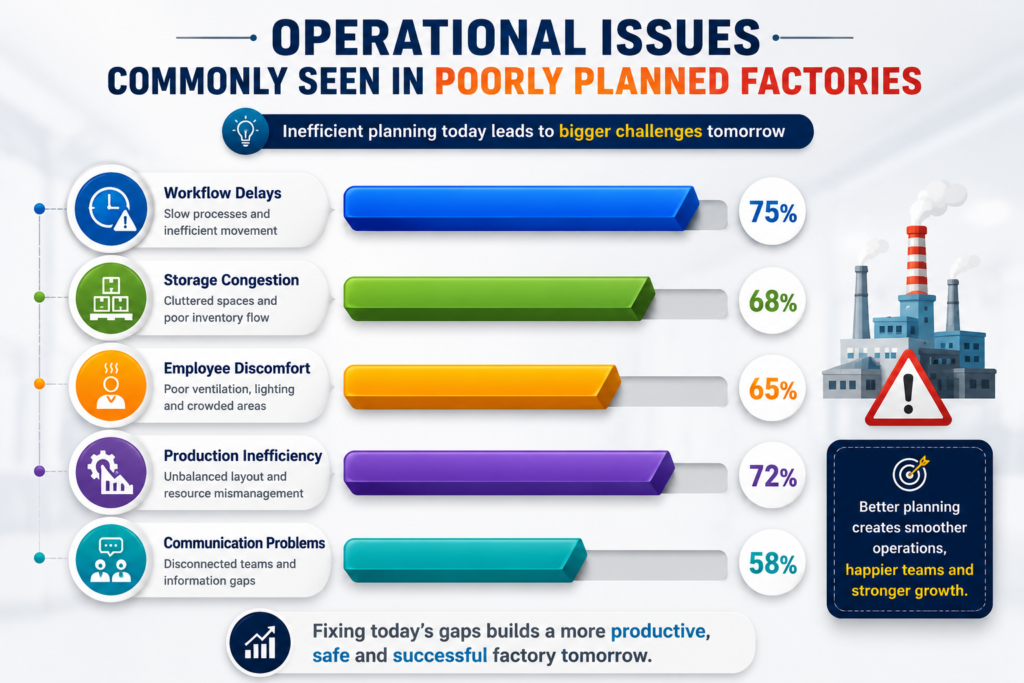
Operational Issues Commonly Seen in Poorly Planned Factories

5. Poor Workflow Movement

Some factories grow without proper layout expansion planning.

As new departments and machines are added randomly, movement becomes confusing.

Employees may struggle with:

  • Long travel paths
  • Congested movement
  • Delayed material transfer
  • Unsafe work conditions

How Industrial Vastu Helps

Industrial vastu shastra focuses on smoother workflow alignment between:

  • Storage
  • Production
  • Packaging
  • Dispatch

This reduces unnecessary movement and improves efficiency.

6. Ignoring Employee Comfort

Modern industries are increasingly focusing on workplace wellness.

Factories with poor layouts often create:

  • Mental fatigue
  • Stressful work environments
  • Communication gaps
  • Reduced motivation

Why Employee Wellness Matters

Comfortable work environments support:

  • Better focus
  • Higher productivity
  • Improved teamwork
  • Lower stress levels

This is one reason why modern businesses are now exploring factory vastu shastra planning.

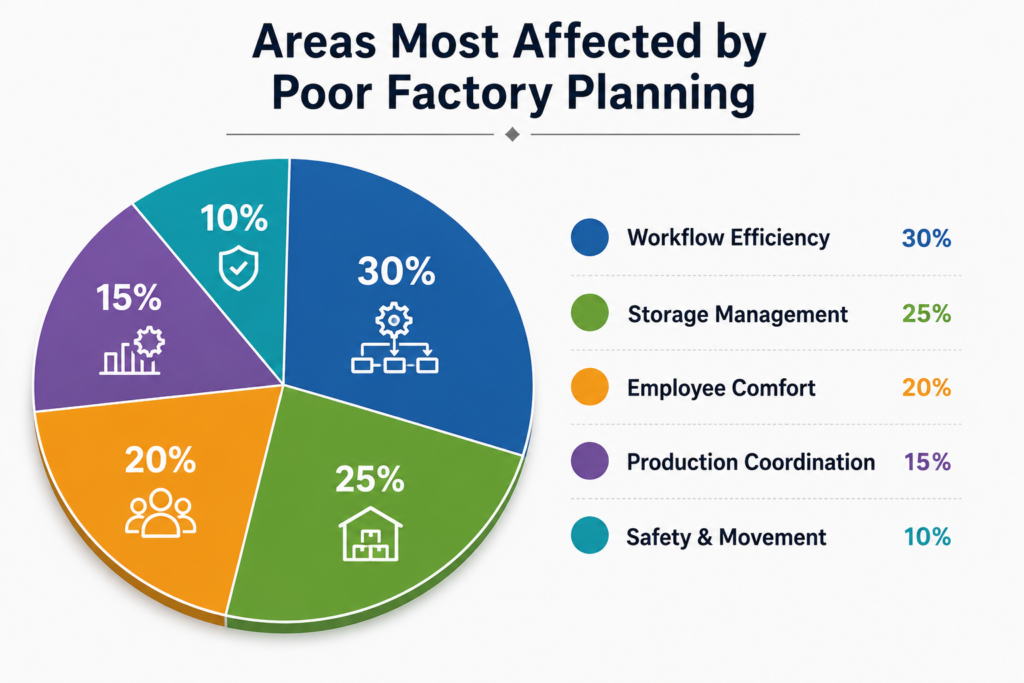
Areas Most Affected by Poor Factory Planning


How Modern Industries Use Industrial Vastu Shastra

Modern industrial architecture already focuses on:

  • Efficient layouts
  • Sustainable planning
  • Better ventilation
  • Functional zoning
  • Employee safety

Industrial vastu shastra supports these goals by encouraging balanced and organised industrial environments.
Today, many businesses combine:

  • Modern factory infrastructure
  • Smart workflow systems
  • Practical Vastu planning

without affecting contemporary industrial design.

How to Avoid Major Factory Vastu Mistakes

Keep Pathways Clear

Avoid blocking operational movement areas with extra materials or unused equipment.

Improve Airflow

Use ventilation systems, windows, and skylights wherever possible.

Separate Functional Zones

Maintain clear distinction between:

  • Raw materials
  • Production sections
  • Packaging
  • Dispatch

Plan Expansion Properly

Do not add machines or storage areas randomly during factory expansion.

Organise Storage Systems

Maintain structured inventory management to avoid confusion.

Reduce Visual Clutter

Clean and organised workspaces improve mental clarity and operational efficiency.

Industrial Vastu Shastra and Workplace Wellness

Today’s industrial businesses understand that productivity depends not only on machines but also on employee wellbeing.

A balanced industrial environment supports:

  • Better morale
  • Reduced stress
  • Smoother communication
  • Higher efficiency

This is why vastu for industry planning is becoming more relevant in modern manufacturing spaces.

FAQs
Q1. What is factory vastu shastra?

Factory Vastu Shastra is the application of Vastu principles to industrial spaces, manufacturing units, and warehouses to improve workflow, balance, and operational efficiency.

Q2. How does industrial vastu shastra help businesses?

It helps improve factory organisation, machine placement, workflow movement, employee comfort, and space management.

Q3. Can modern factories follow vastu for industry principles?

Yes. Modern factories can combine industrial architecture and Vastu planning without affecting functionality.

Q4. Why is machine placement important in factory planning?

Poor machine placement creates congestion, workflow confusion, and operational inefficiency.

Q5. Does factory Vastu affect employee wellbeing?

Organised layouts, ventilation, natural light, and balanced workspaces support employee comfort and productivity.

Q6. Can existing factories improve Vastu without reconstruction?

Yes. Many improvements involve layout adjustments, storage organisation, ventilation upgrades, and better workflow planning.

Q7. Why are businesses focusing on workplace wellness in 2026?

Modern industries understand that employee wellbeing directly affects productivity, communication, and operational stability.

Vastu vs Modern Architecture: How to Balance Both in 2026

Quick Summary

  • Vastu and modern architecture are not enemies; they can actually work together to create healthier, more comfortable homes.
  • Modern homes in Australia (Melbourne, Sydney, Brisbane, Adelaide) can follow Vastu‑friendly layouts without losing contemporary style.
  • Simple changes such as entrance placement, room zoning, and natural light can balance Vastu with architecture in 2026.
  • A professional Vastu consultant can help you blend ancient principles with modern design so your space feels both stylish and calm.

Why Vastu Still Matters in 2026

Many people imagine Vastu as an “old rule book” for houses, but today it is more like a wellness and energy‑design guide. In 2024–2026, global trends in architecture increasingly focus on natural light, fresh air, and human comfort—goals that closely align with Vastu principles.

Modern homes in Australia already use open‑plan layouts, large windows, and energy‑efficient materials; these are great starting points for applying Vastu in modern homes. Instead of choosing between Vastu and modern architecture, you can use Vastu as an “invisible design” layer that supports your lifestyle.

What Is Vastu, Really?

Vastu Shastra is an ancient Indian science of space and energy. It suggests how to place rooms, doors, and even furniture so that air, light, and movement feel more balanced and peaceful.

You don’t need to build a temple‑style house to follow Vastu. For example:

  • Preferable locations for entrances and bedrooms
  • Better airflow and daylight planning
  • Clutter‑free, functional zones

These ideas are easy to adapt to contemporary apartments, townhouses, and villas in Melbourne, Sydney, Brisbane, and Adelaide.

How Modern Architecture Works in 2026

Today’s architecture focuses on:

  • Small footprints are used efficiently (important in big cities)
  • Large windows and natural cross‑ventilation for comfort and sustainability
  • Smart materials, insulation, and indoor air quality standards

In Australia, more homes now include solar‑friendly orientation, light tunnels, and biophilic elements such as indoor plants and green walls. These features feel very modern but already sit on the same “ground” as Vastu principles like natural light orientation and harmony with nature.

Vastu vs Modern Architecture: Key Differences

Below is a simple comparison table to show how classic Vastu ideas translate into modern design thinking.

AspectTraditional Vastu viewHow modern architecture sees it
Direction of the houseEast/north preferred for the main entrance and livingEast‑facing for morning sun; north for consistent daylight 
Room placementKitchen in the southeast, bedrooms in the southwest, etc.Functional zoning (bedrooms away from noise, kitchen near service) 
Light and airLarge windows on the east and north for light and energyDaylight harvesting, cross‑ventilation, and passive cooling 
Relationship with natureHarmony with land, trees, and cardinal directionsBiophilic design and sustainable landscaping 
“Auspicious” layoutBased on energy flow and the five elements (earth, water, fire, air, space)Human‑centric, ergonomic, and easy‑to‑use layouts 

As this table shows, both worlds are trying to create comfortable, healthy living spaces. The difference is mainly in language and presentation, not in core goals.

How to Balance Vastu and Architecture in 2026

You don’t need to rebuild your house to “do Vastu.” Here are practical ways to balance Vastu and architecture in modern homes, especially in Australia.

1. Start with the entrance and flow

A vast majority of Vastu‑friendly homes focus on the entrance because it is the first point of energy coming in. For a modern home in Melbourne or Sydney:

  • Choose a clean, well‑lit entrance foyer.
  • Keep the entry path straight and uncluttered so people can move in and out easily.

You can still follow this while using sleek glass doors and minimalist lobby designs.

2. Plan the “zones” to match both Vastu and lifestyle

Traditional Vastu divides the house into activity zones: relaxation, work, cooking, and socialising. Modern open‑plan homes in Brisbane or Adelaide can follow the same idea by:

  • Keeping the kitchen slightly separate from the main living area (if possible) for better smoke and noise control.
  • Placing the bedroom away from noisy or high‑traffic corners.

This helps you balance Vastu and architecture without sacrificing modern aesthetics.

3. Use natural light and airflow the Vastu way

In 2024–2026, studies show that natural light and good ventilation reduce stress and improve sleep and focus. Vastu already recommends:

  • More windows in the east and north for soft morning light.
  • Bedrooms preferably facing east or south for calm energy.

Modern Australian homes can use light wells, skylights, and sliding doors to meet these ideas while looking modern and stylish.

4. Choose colours and materials that feel calm

Vastu suggests colours and materials that support the room’s purpose. For example:

  • Light, warm tones in living rooms for comfort and connection.
  • Softer, cooler shades in bedrooms to support relaxation.

In new homes, you can combine this with modern finishes such as neutral walls, wooden floors, and textured wallpapers. This keeps the design contemporary and the energy light.

5. Keep technology simple and clutter‑free

Vastu warns against excessive clutter because it blocks energy flow. Modern homes often struggle with too many gadgets and cables. In 2026, smart homes can still follow Vastu‑friendly habits:

  • Clean, hidden wiring
  • Simple furniture layouts
  • Minimal decor on key surfaces (like the dining table and bedroom floor)

This supports both Vastu for modern homes and clean modern architecture.

Vastu in Australia: Practical Relevance

In Australian cities like Melbourne, Sydney, Brisbane, and Adelaide, many Indian and multicultural families want homes that feel “modern” but still carry familiar energy principles. Architecture in Australia is already moving toward human‑centred, sustainable, and wellness‑oriented designs—exactly what Vastu promotes.

A local Vastu consultant can help you:

  • Adjust the layouts of apartments or townhouses where you cannot change the overall orientation.
  • Suggest furniture placement, colour schemes, and small design tweaks that respect both Vastu and your architect’s plan.

This approach builds trust and authority, which supports Google’s EEAT (Experience, Expertise, Authority, Trust) guidelines.

Simple Tips for Your Next Home

Whether you are building a new house or renovating an existing one in Australia, you can:

  • Sketch a simple floor plan and mark where the entrance, kitchen, main bedroom, and living area sit.
  • Ask your architect or designer: “Can we make the main common area receive more natural light from east or north?”
  • Avoid turning bathrooms or heavy storage into the main visual focus of the home.

Small, thoughtful adjustments go a long way in helping you balance Vastu and architecture without losing modern comfort.

Why a Vastu Consultant Helps in 2026

A Vastu consultant trained in both traditional Shastra and contemporary architecture can:

  • Interpret Vastu principles in a flexible way for your site and climate.
  • Work with your architect or builder to tweak layouts, entrances, and room relationships.
  • Give you simple, non‑superstitious suggestions that feel practical and scientific.

This is especially helpful for modern homes in Australia, where lot sizes, council rules, and solar orientation vary from city to city.

If your layout can’t be changed (for example, in apartments or rented homes), you can still correct many Vastu‑related issues with simple, non‑structural remedies.
For easy, no‑demolition fixes like furniture placement, colours, mirrors, and crystals, check our guide on Simple Vastu Remedies Without Breaking Walls

Let’s Keep It Simple and Real

Vastu vs modern architecture is not a battle. In 2026, the best homes are the ones that feel:

  • Comfortable and easy to live in (modern architecture)
  • Calm, light, and positive (Vastu‑inspired energy)

If you want to blend both in your home, offices, or projects in Melbourne, Sydney, Brisbane, or Adelaide, Aunkar Vastu can help you find a balanced, practical solution that fits your lifestyle and design vision.

Looking to balance Vastu and modern architecture?

If you’re designing or renovating a home or office in Melbourne, Sydney, Brisbane, or Adelaide, Aunkar Vastu, one of the best Vastu consultants, can help you integrate Vastu principles in a simple, modern‑friendly way. Book a consultation today and get a clear, practical plan that respects your architecture, budget, and daily life.

FAQs: Vastu vs Modern Architecture

Q: Can I follow Vastu if my house is not east‑ or north‑facing?

Yes. A skilled Vastu consultant can adjust room functions, door positions, and furniture placement so your home still feels balanced, even if the main entrance faces another direction.

Q: Do I need to change my whole house design to follow Vastu?

No. Modern Vastu focuses on small, practical changes such as entrance clarity, room zoning, and clutter control, not on rebuilding everything.

Q: Is Vastu only for Indian‑style homes?

Not at all. Vastu principles about light, air, and zoning fit very well with contemporary apartments, townhouses, and villas in cities like Melbourne, Sydney, Brisbane, and Adelaide.

Q: How can Vastu help in a small apartment?

Vastu‑friendly zoning (sleeping, cooking, working, relaxing) and good lighting make even small spaces feel more spacious and calm.

Q: Can modern architecture ignore Vastu?

Modern architecture can, but blending Vastu often improves comfort, air quality, and energy flow, which many homeowners now value in 2024–2026.

Q: Is Vastu supported by science?

While Vastu is not a strict laboratory science, its emphasis on natural light, ventilation, and organised spaces aligns with architectural and wellness research.

Q: How does a Vastu consultant help modern homes in Australia?

A Vastu consultant tailors Vastu principles to your local climate, site layout, and building style, so you get both modern comfort and energy harmony.

Simple Vastu Remedies Without Breaking Walls

By Aunkar Vastu Experts | Vastu Shastra

Quick Summary: Most Vastu problems in your home or office can be corrected without any construction work. Simple remedies like repositioning furniture, using specific colors, placing crystals, mirrors, or plants in the right spots can restore positive energy flow. This guide shares practical, proven Vastu fixes that work in apartments, rented homes, and offices — no hammer required.

Why You Don’t Always Need to Break Walls for Vastu Corrections

One of the most common concerns people have when consulting a Vastu expert is: “Will I need to demolish my kitchen or move my bathroom?” The good news is — most of the time, you won’t.

Vastu Shastra is an ancient Indian science of space and energy. While ideal Vastu starts at the construction stage, a large number of imbalances in existing homes can be resolved using simple, non-structural remedies. These are called Vastu upay or corrective measures.

At Aunkar Vastu, we have helped hundreds of families and businesses restore balance in their spaces without spending lakhs on renovation.

Want a personalized Vastu check without construction stress? 

Aunkar Vastu offers expert guidance for your specific layout. Explore our vastu for home →

Top Vastu Remedies You Can Apply Right Now

Here are the most effective Vastu remedies that don’t require any structural changes, organized by area of concern.

1. Main Entrance and Front Door

The main door is the entry point for energy into your home. If it faces an unfavorable direction, you don’t need to shift it. Instead:

  • Place a Vastu pyramid or swastika symbol above the entrance
  • Hang a toran (mango leaves or marigold garland) on the door
  • Use a horseshoe or Om symbol on the door to deflect negative energy
  • Ensure the entrance is well-lit and clutter-free at all times

2. Kitchen Direction Issues

Cooking in a kitchen that is not in the southeast zone is common in modern apartments. Here’s what you can do:

  • Face east while cooking by simply repositioning yourself at the stove
  • Place a red bulb or red light in the southeast corner of the kitchen
  • Keep a bowl of sea salt in the corner and replace it monthly — salt is a powerful energy absorber

3. Bedroom Energy Imbalance

Sleep direction and bed placement significantly affect rest and relationships.

  • Sleep with your head pointing south or east — the single most impactful change you can make
  • Remove mirrors facing the bed, or cover them with a curtain at night
  • Avoid keeping heavy storage or a shoe rack under the bed
  • Use rose quartz crystals on the bedside table to improve relationships

4. Toilet in Wrong Direction

Toilets in the northeast or north are considered unfavorable. Without demolition:

  • Keep the toilet seat lid down and the door closed at all times
  • Place a sea salt bowl inside the toilet area and change it weekly
  • Use a Vastu pyramid strip on the toilet wall to neutralize the energy
  • Place a small green plant outside the toilet door

5. Office and Workspace Vastu Fixes

For home offices, rented offices, or corporate cabins:

  • Sit facing north or east while working for improved focus and growth
  • Keep your back to a solid wall, not a window or open space
  • Place a laughing Buddha facing the main door
  • Use green plants like money plant or bamboo in the north or east corner
  • Remove clutter from the northeast corner — this is the zone of knowledge and clarity

Instant Vastu Remedy Guide: Quick Reference Table

Problem AreaSimple RemedyEffort Level
Negative entrance energyHang toran, place Om symbol, bright lightingEasy
Kitchen in the wrong zoneFace east while cooking, red light in SEEasy
Wrong sleep directionShift head to the south or eastEasy
Toilet in NE zoneSea salt bowl, keep lid closed, Vastu pyramidEasy
Relationship problemsRose quartz in the SW bedroom cornerEasy
Financial blockagesKeep the north zone clear, use the Kuber yantraMedium
Health issues in the familySalt water in NE, clean clutter, basil plantEasy
Lack of focus at workFace north/east, clear NE workspace cornerEasy

Which Vastu Issues Respond Best to Simple Remedies?

Based on consultations at Aunkar Vastu, here is an approximate breakdown of how well common Vastu problems respond to non-structural remedies:

Vastu ProblemRemedy Effectiveness
Sleep and health issues90%
Focus and career growth80%
Relationship harmony75%
Financial flow65%
Structural defects (beams, cuts)45%

Note: Structural issues may need a professional Vastu assessment for full correction.

Vastu Remedies for Rented Homes and Apartments

Living in a rented home means you can’t change the layout. But Vastu energy responds to intention and symbolic placements. Here are renter-friendly fixes you can apply today:

Money plant in the north — Attracts financial energy and is easy to maintain in any home.

Mirror in the north — Doubles the energy of the wealth zone. Avoid placing it facing the bed.

Salt water bowl in the NE — Change it weekly to keep absorbing stagnant energy from your space.

Bright warm lighting in the SE — Activates fire zone energy, especially useful near the kitchen area.

Crystal in the SW corner — Rose quartz or amethyst stabilizes relationships and emotional well-being.

Wind chimes in the NW — Stimulates movement energy, helpful for travel and social connections.

When Should You Consult a Vastu Expert?

Simple remedies work well for mild energy imbalances. But certain situations need a deeper look from a trained professional:

  • Recurring health problems in the same family member
  • Persistent financial stress despite consistent hard work
  • Continuous conflicts and tension in the household
  • Business losses or slow growth over multiple years
  • You are about to buy, build, or rent a new property

In these cases, a professional Vastu assessment will identify deeper issues that simple objects may not fully resolve.

Aunkar Vastu offers online and in-person consultations. 

Get a thorough analysis of your home or office Vastu  without unnecessary renovation advice. Consult vastu shastra specialist Aunkar Vastu today →

Frequently Asked Questions

Q1. Can Vastu remedies work without breaking walls?

Yes. Most Vastu imbalances can be corrected using non-structural remedies like crystals, colors, mirrors, plants, yantras, and furniture repositioning. Demolition is rarely needed.

Q2. Which is the most powerful Vastu remedy at home? 

Changing your sleep direction to face south or east is one of the single most powerful Vastu corrections you can make. It costs nothing and affects sleep quality, health, and overall energy significantly.

Q3. What is the best Vastu remedy for financial problems? 

Keep the north zone of your home clean and uncluttered. Place a Kuber yantra or money plant in the north to attract financial energy. Also ensure the main entrance is well-lit and welcoming.

Q4. Can Vastu remedies work in a rented apartment? 

Absolutely. Vastu remedies like sea salt bowls, plants, crystals, wind chimes, and correct sleeping direction are all portable and ideal for tenants. No structural changes are needed.

Q5. How long does it take for Vastu remedies to show results? 

Minor improvements can be felt within a few weeks. For deeper issues like financial blocks or health problems, it may take 3 to 6 months of consistent Vastu practice to see significant changes.

Q6. Is sea salt a good Vastu remedy? 

Yes, sea salt (or rock salt) is one of the most commonly used Vastu remedies. It absorbs negative energy from spaces. Place it in corners, near toilets, or in the northeast zone and replace it every week.

Q7. Does Aunkar Vastu offer online consultations? 

Yes, Aunkar Vastu provides personalized Vastu consultations both online and in-person across India. You can share your floor plan and get a detailed analysis without needing a physical site visit.

15 Easy Vastu Remedies for Positive Energy at Home 

For Indian families living in Australia, home is more than just a place to rest—it’s a small piece of India in a busy Western city. Whether you’re in a high‑rise apartment in Melbourne, a townhouse in Sydney, or a standalone house in Perth, daily life can feel fast, noisy, and stressful.

Vastu Shastra helps you balance energy at home by guiding how to use light, space, layout, and cleanliness. When you follow simple positive energy Vastu tips, you can reduce arguments, improve sleep, and feel more grounded in your new country.

In this article, you’ll find 15 easy Vastu remedies for the home that work perfectly for families living in Australia. These home vastu tips are practical, low‑cost, and easy to apply in any Australian apartment, villa, or rented house.

Why Vastu Works for Homes in Australia

Vastu is an ancient Indian science of space and energy, but its core ideas are simple and universal:
light, air, cleanliness, and balanced layout = better mental health and family harmony. Studies on interior design show that cluttered, dark, or poorly arranged spaces can increase stress and reduce focus.

In Australia, many homes enjoy good sunlight, open‑plan layouts, and green spaces. Vastu helps you use these features to make your home feel calmer, brighter, and more balanced. If you follow these Vastu tips for peace and prosperity, you may notice less tension, better sleep, and a more peaceful family life.

1. Keep Your Entrance Clean and Welcoming

Your main door is the first place where energy enters the home. In Australia, many homes have balconies, small front yards, or tiled entrances. A neat, welcoming entry makes a big difference.

  • Remove shoes, old mail, and unused items outside the door.
  • Fix broken locks, hinges, or cracked tiles.
  • Add a small doormat, a plant, and soft lighting to make it feel warm.

This simple home vastu tip can instantly make your house feel peaceful when you come back from work or school.

2. Declutter Your House Regularly

Many Australian homes have built‑in cupboards and storage, but clutter still builds up over time. Research shows that cluttered homes are linked with higher stress and lower mood. Vastu says removing unnecessary things helps positive energy flow.

  • Donate or throw away old clothes, broken gadgets, and unused furniture.
  • Avoid storing heavy boxes under the bed or in dark corners.
  • Try a “declutter weekend” every 2–3 months.

This vastu dosha remedy is one of the easiest and cheapest ways to refresh your home’s energy.

3. Choose Calm, Light Colors

Vastu suggests light, soft colors for walls and ceilings because they create a sense of peace and brightness. In Australia, where many homes get great sunlight, this works especially well.

  • Use light cream, beige, pale blue, or soft green for walls.
  • Keep ceilings white or very light so the room feels bigger.
  • Avoid very dark or very bright colors in bedrooms and living rooms.

These positive energy Vastu tips are easy to apply, even if you can’t repaint the whole house.

4. Use Natural Light and Fresh Air

Australian homes are known for big windows, sliding doors, and balconies. Vastu values natural light and fresh air because they remove negative energy.

  • Open windows and curtains in the morning for 15–20 minutes.
  • Avoid blocking windows with heavy bookshelves or tall plants.
  • Keep blinds or curtains light so light still enters during the day.

This small habit can make everyone feel more relaxed and cheerful.

5. Create a Pooja or Meditation Corner

Many Indian families in Australia set up a small pooja or meditation area at home, even in small apartments. Vastu recommends placing this in the northeast corner of the house, which is considered peaceful and spiritual.

  • Keep the area clean, simple, and separate from TVs or heavy furniture.
  • Place idols, photos, or candles facing east or west.
  • Use a small lamp or diya to keep the corner softly lit.

This vastu remedy for the home helps children and adults feel more connected and calmer in daily life.

6. Add Indoor Plants Where Suitable

Plants bring fresh air, calm vibes, and a natural touch to any home. In Australia, many families enjoy indoor greenery, and Vastu supports this too.

  • Choose easy plants like money plant, peace lily, snake plant, or tulsi (if you can grow it).
  • Place them on the east or north side of the living room or balcony.
  • Avoid dried or thorny plants in bedrooms.

These home vastu tips are low‑cost, eco‑friendly, and great for families who love gardening.

7. Fix Leaks and Dampness Early

In Australia, bathroom leaks, dripping taps, or damp walls can quickly become a bigger issue. Vastu says water leaks and dampness create a feeling of loss and instability.

  • Repair leaking taps, showers, and pipes soon after you notice them.
  • Clean damp patches on walls and ensure good ventilation.
  • Avoid storing wet clothes or soaked items in living areas.

Fixing these issues can improve both your home’s energy and your financial peace of mind.

8. Keep the Kitchen Clean and Harmonious

In Australia, many homes have open‑plan kitchens connected to the living and dining areas. Vastu says this layout is good, as long as the kitchen stays clean and organized.

  • Keep the stove in the southeast area if your layout allows.
  • Avoid having the sink directly opposite the stove.
  • Store sharp knives and heavy pots in closed cabinets, not lying open.

These home vastu tips can make cooking and family meals more peaceful and enjoyable.

9. Use a Small Water Feature (If Possible)

Some Australian homes have balconies, courtyards, or gardens. Vastu suggests that a small water element can bring calm and a sense of growth.

  • Place a small tabletop fountain or a small indoor aquarium.
  • Keep the water clean and change or filter it regularly.
  • Avoid water features in the bedroom or toilet.

This simple vastu remedy for the home can make your balcony or living room feel more relaxed.

10. Remove Broken or Negative Objects

Old clocks, broken idols, cracked mirrors, or very dark pictures can create a subtle feeling of heaviness in the home.

  • Replace or repair broken items instead of keeping them “for later.”
  • Choose positive wall art such as family photos, nature scenes, or spiritual symbols.
  • Avoid violent or very dark images in living areas.

This is one of the quickest and cheapest Vastu dosha remedies you can do.

11. Keep Electronics Away from the Bedroom

In Australia, many people use phones, laptops, and tablets in bed, which can disturb sleep. Vastu recommends keeping the bedroom simple and gadget‑free for better rest.

  • Avoid TVs, laptops, and multiple chargers near the bed.
  • Put your phone on airplane mode or switch it off at night.
  • Use warm, soft lighting instead of bright white bulbs.

These positive energy Vastu tips often lead to deeper sleep and a more relaxed morning.

12. Place Mirrors and Wardrobes Carefully

Mirrors and wardrobes are common in Australian homes, but Vastu suggests they should not block energy flow.

  • Avoid mirrors directly opposite the bed or main door.
  • Keep wardrobes fixed to the north or west wall, not blocking the door.
  • Keep mirrors clean and repair any cracks.

This small change can make your bedroom feel more airy and peaceful.

13. Use Rock Salt or Crystals in Corners

Some Vastu experts suggest using natural materials like rock salt or crystals to absorb negative energy.​

  • Place a small bowl of rock salt in dark or unused corners.
  • Change or discard the salt every 2–3 weeks.
  • Keep it where children or pets cannot reach.

This gentle Vastu remedy for the home is trusted by many families who want extra peace and positivity.​

14. Keep the Bedroom Simple and Calm

Australian bedrooms are often spacious, but too much furniture or clutter can still create stress. Vastu suggests a light, simple layout.

  • Place the bed against the south or west wall if possible.
  • Avoid heavy furniture or wardrobes above the head of the bed.
  • Keep the space under the bed as clear as possible.

Following these home vastu tips can reduce restlessness and improve family harmony.

15. Create a Peaceful Sitting Corner

Even in small Australian apartments, you can create a small corner for sitting, reading, or meditating.

  • Use a small rug, cushion, or low chair.
  • Add a plant or a small lamp to make the corner feel cozy.
  • Keep this area free from phones and TV screens as much as possible.

This simple vastu remedy for positive energy at home helps family members relax and connect after a busy day.

Final Thoughts

These 15 easy Vastu remedies for positive energy at home are designed to work in Australian living conditions—whether you live in a high‑rise apartment in Melbourne, a townhouse in Sydney, or a standalone house in Perth. When combined with regular cleaning, good lighting, and a calm attitude, they can help reduce stress, improve sleep, and bring more peace and prosperity into your home.

If you still feel constant tension, confusion, or low energy in the house, it may help to get a personalized home Vastu consultation tailored to your exact floor plan and location in Australia.

The Aunkar Vastu team works with all families across major Australian cities to suggest simple, practical Vastu dosha remedies that match your lifestyle and home type. Consider booking a short consultation with the best Vastu consultant in Melbourne, Aunkar Vastu, today and start creating a home that feels lighter, more harmonious, and truly yours.

Open chat
Welcome to Aunkar Vastu
Hello 👋
Can we help you?