

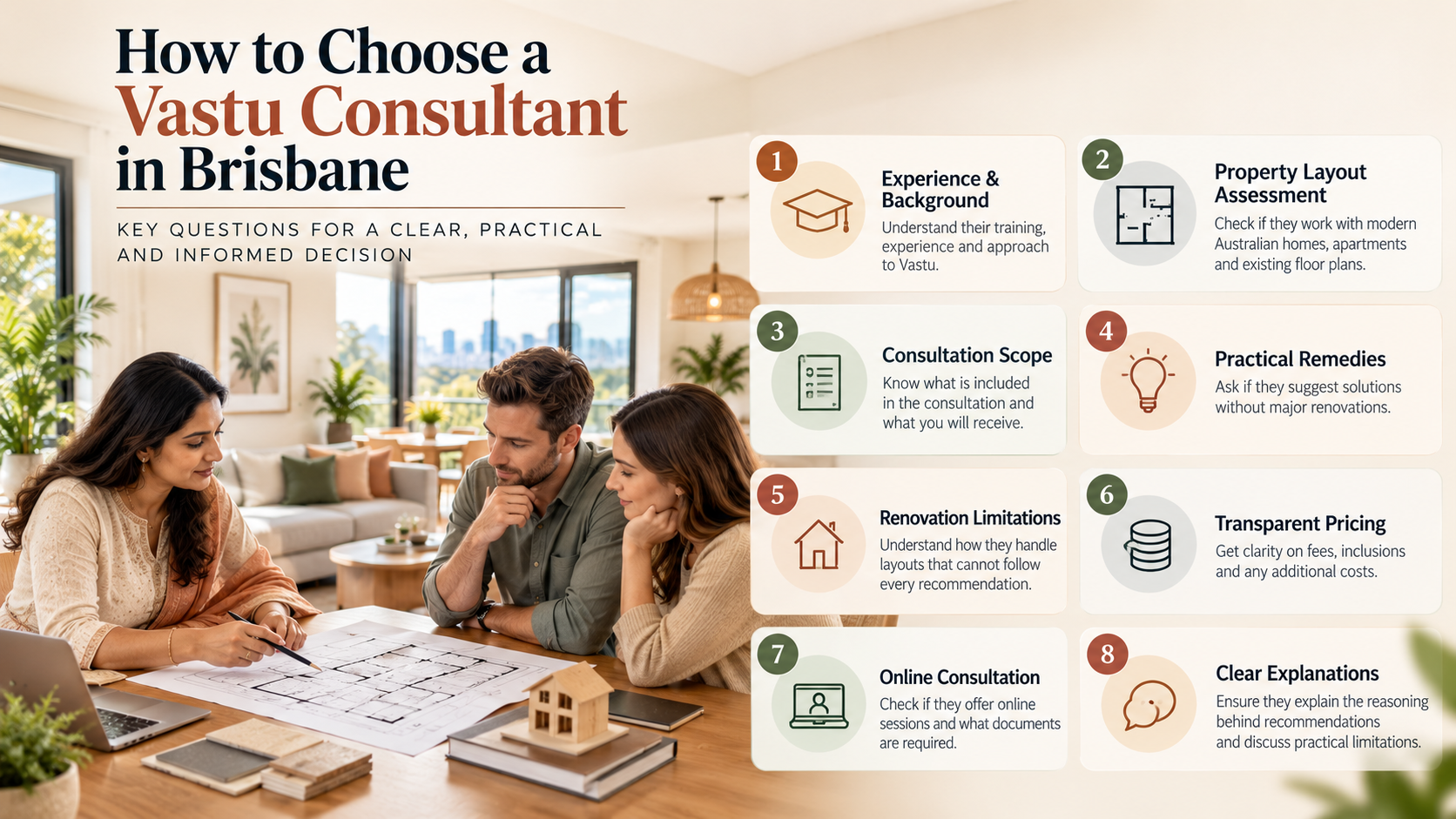
Choosing someone to assess your home using Vastu Shastra involves more than finding a practitioner online. You need to understand their approach, what the consultation includes, how recommendations are made, and whether the proposed changes suit your property.
This is particularly relevant when applying traditional Vastu principles to modern Australian homes, where existing floor plans, building structures, renovations, and practical requirements can limit what is possible.
If you are looking for a Vastu Consultant in Brisbane, asking the right questions before booking can help you compare practitioners and understand what to expect. It can also help you avoid unnecessary expenses and unrealistic promises.
Here are ten important questions to ask before choosing a Vastu expert for your home.
1. What Experience Do You Have in Vastu Shastra?
Experience is one of the first things to explore when evaluating a Vastu practitioner. Vastu Shastra encompasses traditional principles concerning directions, entrances, room placement, and spatial arrangements. Practitioners may differ in their training, interpretation, and assessment methods.
Rather than relying only on a title or promotional claims, ask about the practitioner’s background and the types of properties they have assessed.
Questions to ask:
- What training or study have you completed in Vastu Shastra?
- How long have you been providing consultations?
- Do you work primarily with residential properties or commercial spaces?
- How do you approach homes with unusual floor plans?
- Can you explain the principles behind your recommendations?
A good practitioner should be able to describe their approach clearly and explain why a recommendation may be relevant to your situation.
Why this matters: Understanding a practitioner’s background helps you decide whether their approach matches your expectations. Do not assume that every consultant follows the same methodology.
2. Do You Understand Modern Australian Home Layouts?
Traditional architectural principles may need to be considered alongside the realities of a modern Australian property. Homes in Brisbane can include detached houses, townhouses, apartments, split-level layouts, and properties with extensions or open-plan interiors.
An existing floor plan may not allow every traditional recommendation to be implemented.
Questions to ask:
- Have you assessed homes with layouts similar to mine?
- Can you work with an existing floor plan?
- How do you assess apartments and townhouses?
- What happens when the preferred room arrangement is not possible?
- Can you suggest alternatives that do not involve structural changes?
For example, a homeowner may want to review bedroom placement but have limited options because of fixed walls, windows, and bathroom locations. A thoughtful assessment should acknowledge these restrictions rather than automatically recommend major construction.
Why this matters: A practical approach helps you understand which recommendations are feasible for your property and which would require further professional assessment.
3. What Does Your Vastu Consultation Include?
Not every consultation provides the same level of detail. Some practitioners may offer a general discussion, while others may review floor plans, room orientation, entrances, furniture placement, and specific concerns raised by the homeowner.
Before booking a Vastu consultation in Brisbane, ask what the service actually covers.
Questions to ask:
- Will you review my complete floor plan?
- Do you assess individual rooms as well as the overall layout?
- Will I receive written recommendations?
- Can I ask follow-up questions after the consultation?
- Is a second appointment included in the fee?
Also ask whether the consultation is intended for a new property, an existing home, or a renovation project. The information required and the scope of work may differ.
Why this matters: Knowing exactly what is included allows you to compare services fairly and understand what you will receive for your payment.
4. How Will You Assess My Home’s Direction and Floor Plan?
Directions and spatial relationships are commonly considered in Vastu assessments. However, a property’s orientation should be established carefully rather than guessed from a photograph or a rough description.
Ask the practitioner how they determine the relevant directions and how those directions are interpreted within the floor plan.
Questions to ask:
- What information do you need to establish the home’s orientation?
- Should I provide a measured floor plan?
- Do you need the location of the main entrance and windows?
- How do you assess irregular or extended floor plans?
- Will you explain how the orientation affects your recommendations?
You may be asked to provide a floor plan, entrance location, room names, and directional information. Confirm the required documents before your appointment.
Why this matters: Clear information about the property helps the practitioner explain their assessment and makes it easier for you to understand how their recommendations relate to your home.
5. Can You Suggest Vastu Remedies Without Major Renovations?
Many homeowners want to explore Vastu principles without moving walls, relocating plumbing, or undertaking expensive structural work. This is an important consideration for people living in established homes, apartments, and rental properties.
Ask whether the practitioner distinguishes between minor adjustments and recommendations that require construction.
Questions to ask:
- Can furniture placement be adjusted instead of changing a room’s structure?
- Are there options for homes where the entrance cannot be relocated?
- Which recommendations are optional, and which are central to your approach?
- Can you prioritise suggestions according to my budget?
- Will you explain when a structural change is genuinely necessary?
Possible non-structural adjustments may include reorganising furniture, clearing circulation routes, improving lighting, and reviewing how a room is used. Whether these adjustments address a particular traditional Vastu concern depends on the practitioner’s methodology.
Why this matters: Understanding alternatives can help you avoid committing to expensive work before assessing simpler options. Any building, electrical, plumbing, or structural changes should be evaluated by appropriately qualified professionals.
6. How Do You Handle Homes That Cannot Follow Every Vastu Recommendation?
An existing property rarely offers unlimited flexibility. The location of load-bearing walls, bathrooms, staircases, windows, and utility connections may restrict possible changes.
A useful consultation should acknowledge these limitations and explain the available options.
Questions to ask:
- What if my existing layout differs from your preferred arrangement?
- How do you prioritise competing recommendations?
- Can you identify which changes are practical and which are difficult?
- Will you explain the limitations of your recommendations?
- Can I retain important features of my home while considering Vastu principles?
For example, a townhouse owner may not be able to change the position of a staircase or kitchen. The practitioner should explain how they would assess the existing layout rather than assume that a complete redesign is possible.
Why this matters: Flexibility and transparent explanations help you make informed decisions about your property without treating every traditional guideline as an absolute requirement.
7. What Are Your Consultation Fees and Additional Costs?
Understanding the total cost before booking is essential. Consultation fees may depend on the service scope, property size, assessment format, and whether follow-up sessions are offered.
Do not assume that two consultations with similar descriptions include the same services.
Questions to ask:
- Is the fee fixed or based on the property’s size?
- Does the price include a floor-plan review?
- Are written recommendations included?
- Are follow-up calls or revisions charged separately?
- Could additional fees apply if I need another assessment?
Ask for the fee and service inclusions in writing where possible. If a practitioner recommends renovation work, separate the consultation fee from construction, design, and contractor costs.
Why this matters: Clear pricing helps you budget realistically and compare practitioners based on the actual service provided, not just the initial quoted amount.
8. Do You Offer Online Vastu Consultation in Brisbane?
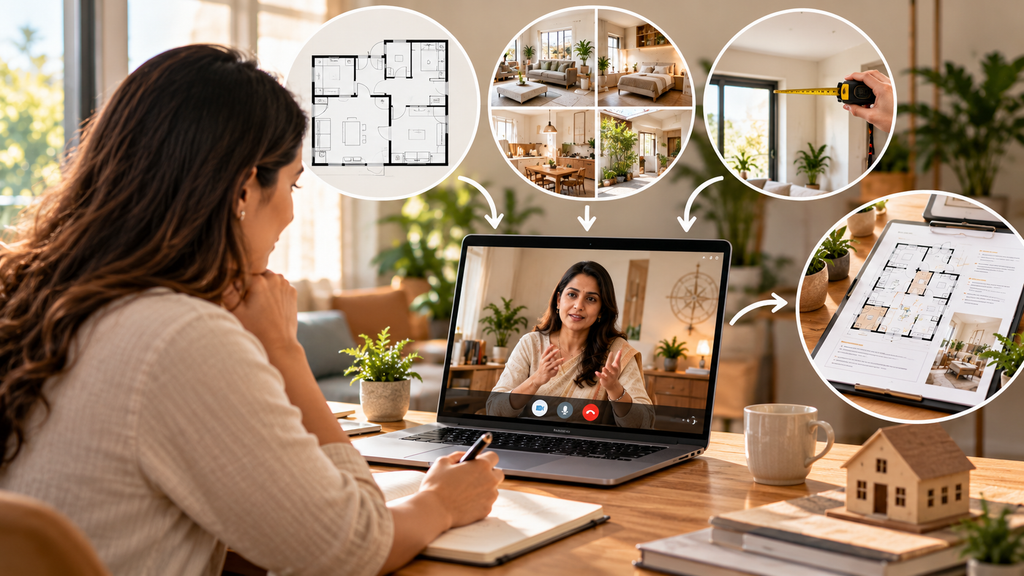
An online consultation may be convenient if you cannot attend an in-person appointment or want to discuss a property remotely. Whether it is suitable depends on the assessment required and the documents you can provide.
Ask how the remote process works before booking.
Questions to ask:
- Can I share my floor plan digitally?
- Which photographs or measurements will you need?
- Will the consultation take place through a video call or another format?
- Will I receive recommendations after the meeting?
- Can complex questions be addressed remotely?
A homeowner might send a floor plan and photographs before an appointment, allowing the practitioner to discuss the layout during the session. However, the exact process varies by provider.
Why this matters: Understanding the process helps you prepare the right information and decide whether an online assessment is appropriate for your needs.
9. Can You Explain Your Recommendations and Their Limitations?
A consultation should help you understand the reasoning behind a recommendation, not leave you with a list of unexplained instructions.
Vastu is a traditional belief system, and interpretations can vary between practitioners. It is therefore reasonable to ask how a recommendation is derived and what alternatives may be available.
Questions to ask:
- Why are you recommending this change?
- Which traditional principle informs the recommendation?
- Are there alternative interpretations?
- What are the practical limitations?
- How should I prioritise this suggestion against other household needs?
Be cautious about guarantees that a particular room arrangement will definitely produce wealth, health, career success, or relationship improvements. Such outcomes cannot be reliably guaranteed through spatial arrangements.
Why this matters: Clear explanations allow you to assess the advice thoughtfully and decide which recommendations align with your beliefs, budget, and practical needs.
10. What Should I Prepare Before the Consultation?
Preparation can make your appointment more focused. Providing accurate information about your home allows the practitioner to understand the questions you want addressed.
Before your consultation, ask for a checklist of the documents and details required.
You may need to prepare:
- A floor plan showing room names and fixed installations.
- The main entrance location and property orientation, if known.
- Photographs of rooms you want to discuss.
- Details of planned renovations or recent layout changes.
- A list of specific concerns and questions.
- Your budget and any restrictions on structural changes.
If you are purchasing a property, you can also ask whether the practitioner can review the available floor plan before you make a decision. This should complement standard property inspections and other professional due diligence.
Why this matters: Preparing in advance helps you use the appointment efficiently and makes it easier to understand the recommendations afterwards.
What to Check Before Hiring a Vastu Consultant
How to Choose the Right Vastu Consultant in Brisbane
After asking these questions, compare the answers rather than relying on advertising alone. A suitable practitioner should explain their process, make the service scope clear, discuss practical limitations, and give you enough information to decide whether the consultation meets your needs.
Consider the following steps:
- Shortlist practitioners: Review their published service descriptions and verifiable background information.
- Compare consultation formats: Check whether the service is online, in person, or based on floor-plan review.
- Confirm the cost: Ask what is included and whether follow-up fees apply.
- Discuss your property: Explain your layout, priorities, and restrictions before committing to changes.
- Review the recommendations: Make sure you understand the advice and can distinguish traditional preferences from practical building requirements.
A Vastu Consultant in Brisbane should be able to explain their approach without pressuring you into unnecessary spending. The purpose of asking questions is to understand the service and make a considered choice.
FAQs
1. How do I find a reliable Vastu Consultant in Brisbane?
Start by reviewing a practitioner’s background, consultation process, and published service details. Ask how they assess floor plans, whether they offer online consultations, what the fee includes, and how they explain recommendations. Look for transparent communication and realistic expectations rather than guaranteed outcomes. Comparing answers from several practitioners can help you determine which approach best suits your property, preferences, and budget.
2. What should I ask before booking a Vastu consultation?
Ask about the practitioner’s experience, assessment method, service inclusions, fees, and follow-up options. Find out whether they need a floor plan, photographs, measurements, or information about the property’s orientation. You should also ask whether they can suggest practical alternatives when structural changes are not possible. These questions help you understand what the consultation involves before making a financial commitment.
3. How much does a Vastu consultation in Brisbane cost?
The cost depends on the practitioner, consultation format, property requirements, and services included. Some providers may offer a focused discussion, while others may provide a detailed floor-plan review or written recommendations. There is no verified standard price supplied for this article. Request a written quotation that specifies the assessment scope, follow-up arrangements, and any additional charges before booking.
4. Can I get an online Vastu consultation for my Brisbane home?
Online consultations may be available from practitioners who assess properties remotely. You may need to provide a floor plan, photographs, room details, and the entrance orientation if known. Ask whether the consultation includes a live discussion, written recommendations, and follow-up questions. Remote assessment may suit many layout-related questions, although the suitability of the format depends on the property’s complexity and the practitioner’s process.
5. Is a Vastu consultant necessary before buying a house?
A consultation is optional, but it may be useful if applying Vastu principles is an important part of your property decision. A practitioner can discuss the floor plan and explain possible adjustments within the layout. However, Vastu guidance should not replace building inspections, financial checks, legal advice, or other property due diligence. Consider these services separately so you can evaluate both traditional preferences and the property’s practical condition.