

Your home is more than a place to sleep. It is where you relax, spend time with family, work, and build everyday routines. The way your rooms are arranged, how natural light enters, and how comfortably you can move through your space can influence your overall living experience.
Vastu Shastra is a traditional Indian system of architectural and spatial planning that considers factors such as directions, room placement, entrances, and the arrangement of different areas within a home. Many people follow its principles when designing a new property or adapting an existing one.
However, applying Vastu principles in a modern Australian home can raise practical questions. What if your kitchen is already built in a different direction? Can you make adjustments without renovating? And which recommendations are worth considering before buying a property?
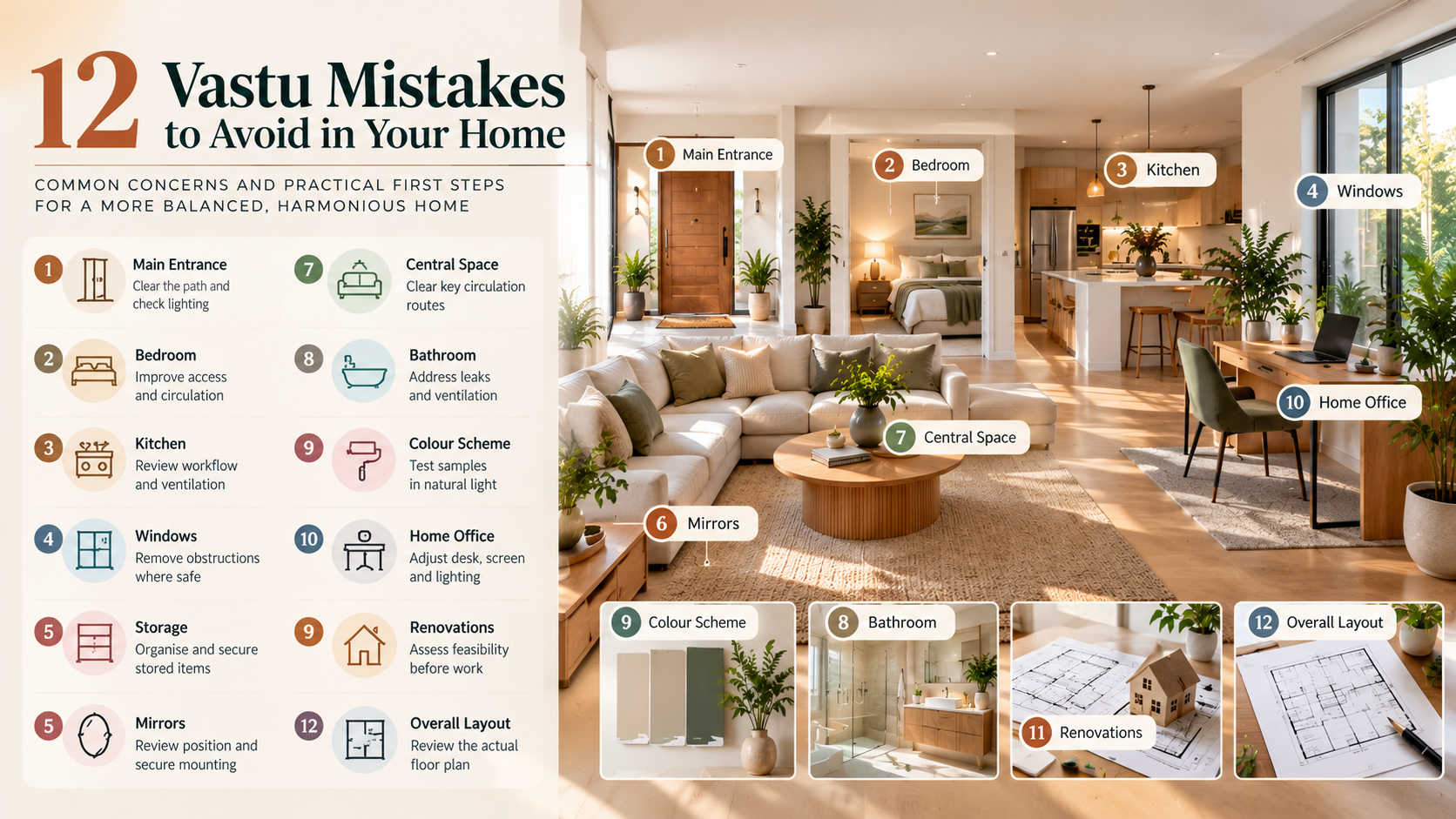
This guide explores 12 common Vastu mistakes to avoid in your home, along with practical steps you can take to improve the organisation and usability of your space. If you are considering guidance from a Vastu Consultant in Brisbane, these points can also help you understand which areas may need a more personalised assessment.
Note: Vastu is a traditional belief system. Claims about energy, prosperity, health, or other outcomes should not be treated as scientifically established guarantees. Practical recommendations below also consider comfort, maintenance, safety, and everyday functionality.
1. Ignoring the Direction and Placement of the Main Entrance
In traditional Vastu Shastra, the main entrance is considered an important part of a home’s overall layout. Its direction and position are often evaluated when assessing a property’s design.
A common mistake is assuming that every entrance facing a particular direction is automatically good or bad. Traditional interpretations can vary, and the direction alone does not tell the whole story.
For Brisbane homeowners, the entrance should also be practical for the property’s orientation, weather exposure, access, and security.
What can you do instead?
- Keep the entrance clean, well-lit, and easy to access.
- Ensure the front door opens and closes properly.
- Avoid blocking the doorway with shoes, boxes, or unnecessary furniture.
- Check that outdoor lighting and the entry path are safe at night.
- If you follow Vastu, assess the entrance direction in relation to the complete floor plan rather than relying on a single rule.
A well-maintained entrance improves everyday convenience regardless of the Vastu interpretation you follow.
2. Choosing the Wrong Bedroom Layout
Bedroom placement is another area commonly considered in Vastu assessments. Traditional recommendations may discuss the location of the main bedroom, the bed’s position, and the direction in which a person sleeps.
One mistake is rearranging an entire bedroom to follow a general online recommendation without considering the room’s dimensions, windows, doors, or ventilation.
How can you improve your bedroom layout?
- Position the bed so that movement around it remains comfortable.
- Avoid obstructing windows, wardrobes, or doors.
- Use window coverings that provide suitable privacy and light control.
- Keep walkways clear and minimise unnecessary clutter.
- Consider traditional Vastu preferences as part of the layout decision, not as a substitute for comfort or safety.
If your bedroom cannot follow a preferred direction, you may still be able to improve its functionality without making expensive structural changes.
3. Placing the Kitchen Without Considering the Overall Layout
The kitchen is a central functional space in many homes. Vastu traditions often associate particular directions with cooking and kitchen placement, but an existing Australian home may have limited options because of plumbing, electrical connections, and its architectural design.
A common mistake is attempting to relocate a stove or sink simply because a general Vastu chart recommends a different position.
Practical steps to consider:
- Maintain adequate ventilation, especially when cooking.
- Keep the stove, sink, and food preparation areas organised.
- Store flammable materials away from heat sources.
- Keep electrical appliances and connections safe and suitable for kitchen use.
- Consider the preferred Vastu arrangement alongside the actual floor plan and building requirements.
If you are planning a new home, discuss layout preferences with your architect or builder early. Changes are usually easier to evaluate before construction than after the kitchen has been installed.
4. Blocking Natural Light and Airflow
A dark, poorly ventilated, or overcrowded room can feel uncomfortable regardless of its orientation. Although traditional Vastu interpretations often discuss openness and the movement of energy, natural light and ventilation also have direct practical importance in residential design.
In Brisbane, sunlight, seasonal weather, humidity, and outdoor conditions can all affect how a room feels throughout the day.
Common mistakes include:
- Placing bulky furniture in front of windows.
- Keeping curtains closed throughout the day when natural light is appropriate.
- Blocking ventilation openings.
- Allowing stored items to restrict airflow.
- Ignoring moisture, condensation, or signs of mould.
A better approach: Keep windows and ventilation paths unobstructed, use suitable window coverings, and maintain the home according to its ventilation and moisture-control needs. Do not remove safety barriers or compromise weather protection in an attempt to improve airflow.
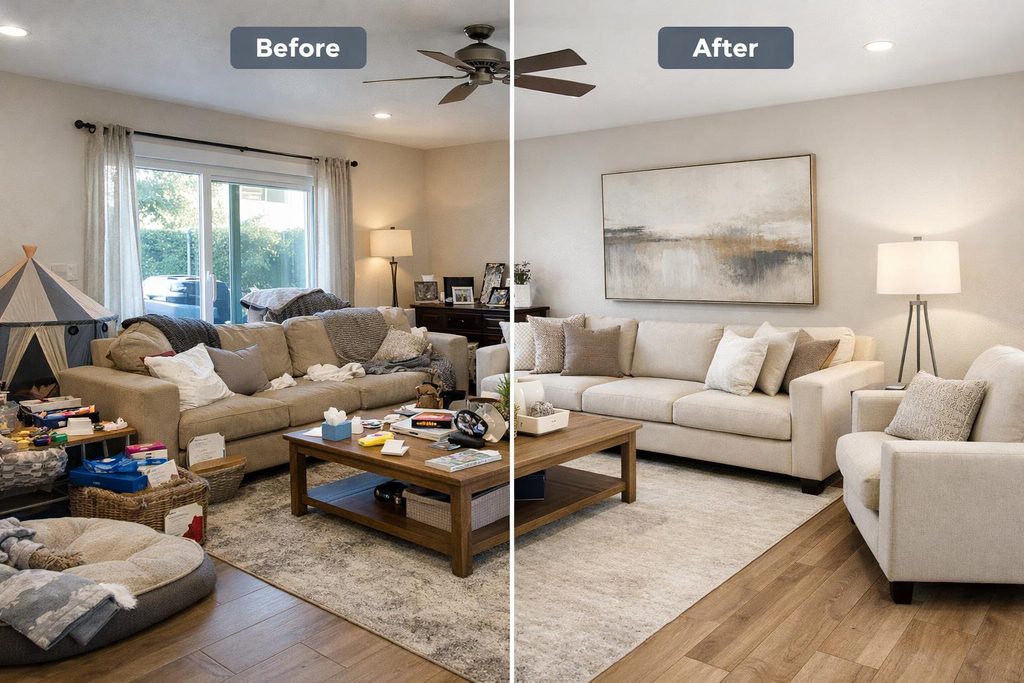
5. Allowing Clutter to Accumulate in Important Areas
Clutter is a common concern in traditional Vastu discussions. Many practitioners recommend keeping entrances, central spaces, and frequently used rooms open and organised.
However, decluttering does not require discarding useful possessions or buying new storage products. The objective is to make your home easier to use and maintain.
Try these simple changes:
- Remove items that obstruct doors and walking paths.
- Store shoes, bags, and daily essentials in designated places.
- Keep frequently used kitchen surfaces reasonably clear.
- Review unused items periodically.
- Organise storage areas so that heavy objects remain secure and accessible.
If you live in an apartment or a compact property, use vertical storage where appropriate and avoid overcrowding narrow passageways.
A clean, organised layout can improve convenience without requiring any major renovation.
6. Positioning Mirrors Without Considering Their Practical Effects
Mirrors are frequently discussed in Vastu guidance, particularly in relation to their position in bedrooms, entrances, and living rooms. Traditional recommendations about mirrors vary, so it is best not to assume that every placement is automatically harmful.
A practical mistake is installing a mirror where it creates glare, obstructs movement, or reflects an unpleasant view.
How should you approach mirror placement?
- Check what the mirror reflects from the main viewing positions in the room.
- Avoid placing mirrors where they create distracting reflections at night.
- Secure large mirrors properly to prevent accidents.
- Consider privacy when a mirror faces a window or an entrance.
- If following a particular Vastu tradition, assess the mirror’s position within the complete room layout.
A mirror should complement the space while remaining safe and functional.
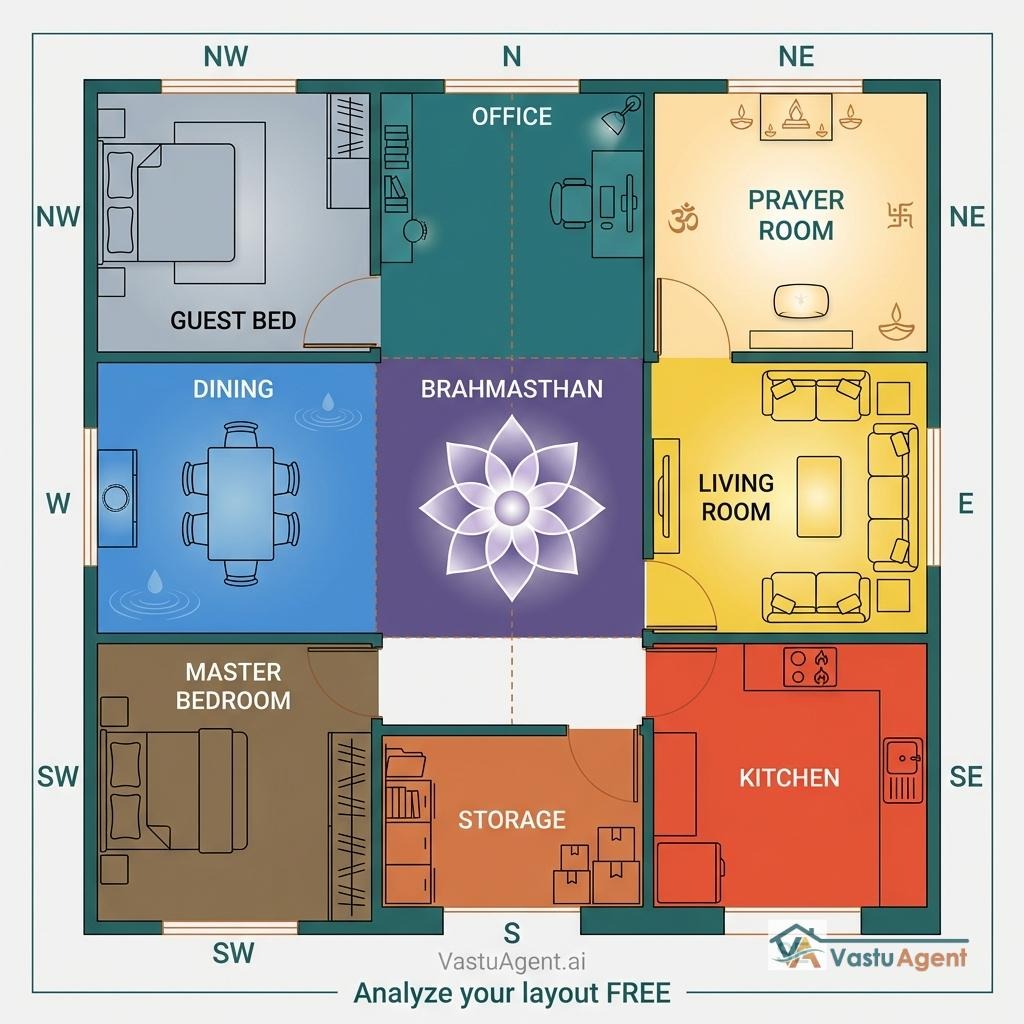
7. Ignoring the Home’s Centre and Circulation Space
Some Vastu approaches give special importance to the central area of a home. This is sometimes referred to as the Brahmasthan.
One common mistake is filling the centre of a living space with bulky furniture, storage units, or unnecessary objects without considering how people move through the home.
What can you do?
- Keep central walking routes reasonably open.
- Avoid placing furniture where it creates awkward turns or narrow passages.
- Arrange seating to support conversation and comfortable movement.
- Ensure doors and access routes remain unobstructed.
- In smaller homes, focus on an efficient layout rather than trying to create an entirely empty central space.
The exact treatment of the home’s centre depends on the floor plan and the Vastu tradition being followed. An open, usable space is a practical goal even when the architecture does not permit a traditional arrangement.
8. Neglecting Bathroom and Toilet Placement
Bathroom and toilet placement is often included in traditional Vastu assessments. Some recommendations associate particular directions with these areas, but the location of an existing bathroom is usually difficult to change without significant construction work.
A common mistake is treating the bathroom’s direction as more important than leaks, dampness, drainage, or ventilation.
Practical improvements include:
- Repair leaking taps, pipes, and fixtures promptly.
- Maintain suitable ventilation to manage moisture.
- Keep the bathroom clean and functional.
- Check for damaged seals, persistent dampness, and mould.
- Ensure drainage and waterproofing issues are addressed by qualified professionals.
If you are purchasing a home, a building inspection can help identify practical problems that may be more urgent than a traditional directional concern.
9. Using Incorrect Colours Without Considering the Room
Vastu recommendations sometimes associate directions and room functions with particular colours. However, there is no single colour scheme that suits every home or guarantees a particular outcome.
A mistake is painting an entire room in a colour you dislike because it is described online as universally favourable.
How to choose colours more thoughtfully:
- Consider the room’s natural light and size.
- Use colours that suit the intended purpose of the space.
- Test paint samples under different lighting conditions.
- Coordinate wall colours with existing furniture and flooring.
- If colour selection is part of your Vastu approach, consider traditional guidance alongside your own preferences.
For example, a light, neutral palette may help a compact room feel more open, while a deeper accent colour can create visual interest without overwhelming the space. The right choice depends on the room and the desired appearance.
10. Arranging the Home Office Without Considering Comfort
Working from home has made workspace planning an important part of residential design. Vastu traditions may recommend particular directions for a desk or seating position, but productivity also depends on factors such as lighting, ergonomics, interruptions, and access to equipment.
A common mistake is choosing a desk position based entirely on direction while ignoring glare on the screen or an uncomfortable chair.
Improve your workspace by:
- Positioning the monitor to reduce reflections and glare.
- Using a suitable chair and desk height.
- Keeping essential work materials within easy reach.
- Providing adequate task lighting.
- Reducing unnecessary distractions.
- Considering traditional Vastu desk-placement preferences when they fit the room.
If the room has limited space, a practical and comfortable setup is more useful than forcing a layout that interferes with daily work.
11. Making Expensive Changes Based on Generic Vastu Advice
Not every home can follow every traditional recommendation. Existing walls, structural elements, plumbing, windows, and fixed installations limit what can reasonably be changed.
A significant mistake is beginning costly renovations after reading a general Vastu rule without first checking whether the recommendation applies to the specific property.
Before making a change, ask yourself:
- Is the recommendation relevant to my home’s actual floor plan?
- Is the proposed change necessary, or is there a simpler adjustment?
- Will it affect plumbing, electrical systems, ventilation, or structural elements?
- What will the work cost, and what practical benefit will it provide?
- Have I consulted a suitably qualified building professional where necessary?
For many existing homes, small changes to furniture placement, organisation, and lighting are easier to implement than structural alterations.
A personalised assessment can help you distinguish between adjustments that are practical and changes that would require significant planning.
12. Following Online Vastu Rules Without a Personalised Assessment
Online articles, videos, and diagrams can introduce you to common Vastu principles, but they may not reflect the layout of your property or the specific tradition you want to follow.
One diagram cannot account for every entrance, extension, split-level home, apartment layout, or site orientation.
This is where a professional consultation may be useful.
What should you prepare for an assessment?
- A floor plan showing room names and fixed installations.
- The main entrance location and the property’s orientation, if known.
- Information about planned renovations or recent changes.
- The specific rooms or layout concerns you want to discuss.
- Your budget and any restrictions on making structural changes.
A Vastu Consultant in Brisbane can help you discuss how traditional Vastu principles may be applied to your particular property, including which adjustments may be possible without major renovation.
When selecting a consultant, look for a clear explanation of the assessment process, transparent fees, and realistic expectations. Avoid anyone who guarantees wealth, health, or other life outcomes from a particular arrangement.
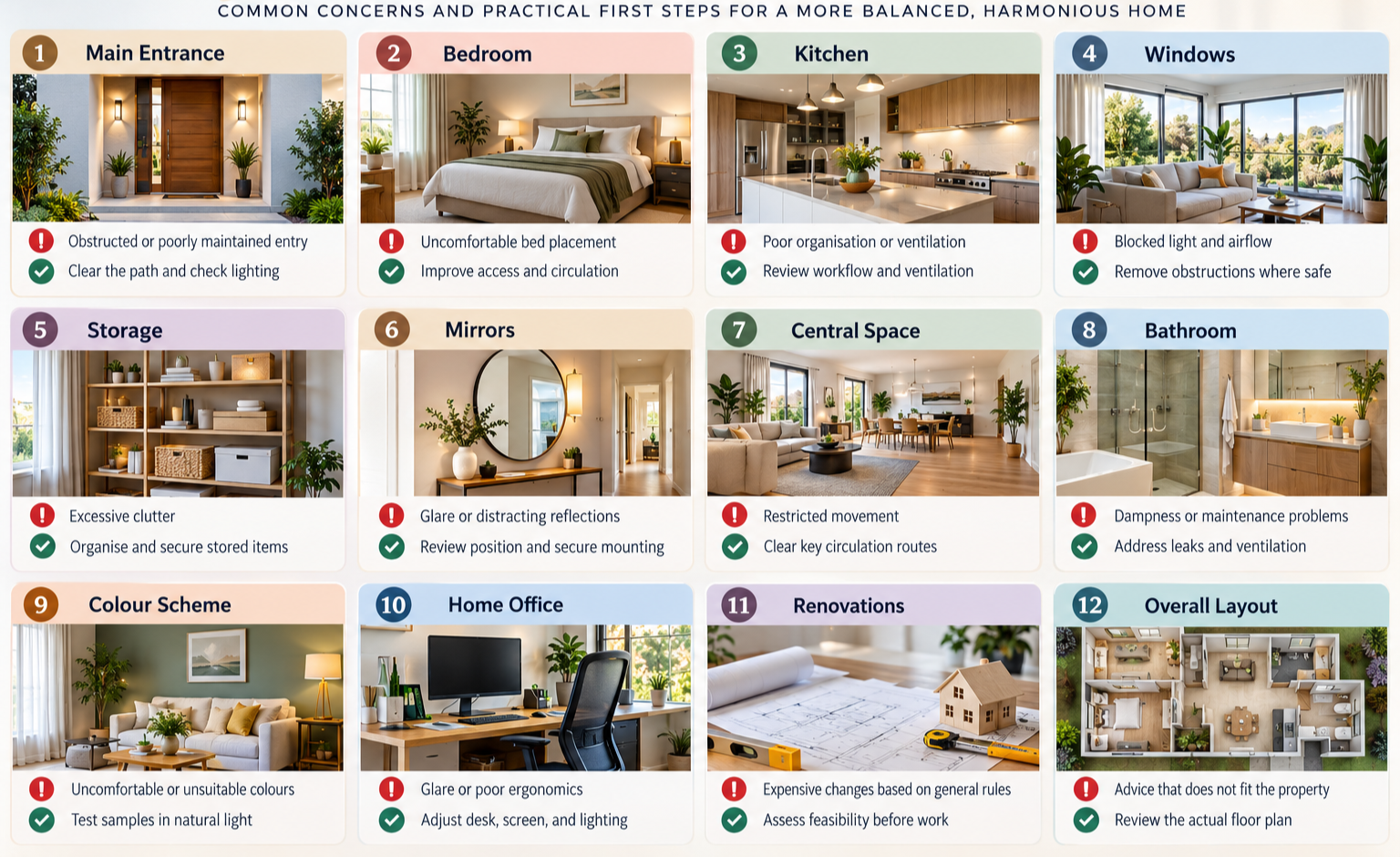
Quick Comparison: Common Vastu Concerns and Practical Solutions
Should You Consult a Vastu Expert for Your Brisbane Home?
Not every concern requires a formal consultation. You can begin with straightforward improvements such as organising storage, improving lighting, checking ventilation, and making better use of available space.
However, personalised guidance may be helpful when you are:
- Buying or building a new property.
- Planning a major renovation.
- Unsure how traditional Vastu principles apply to an existing floor plan.
- Comparing several property layouts before making a decision.
- Seeking guidance for a home office or a particular room.
- Trying to understand which adjustments are feasible without structural changes.
A consultation should help you understand your options, not pressure you into unnecessary work. Building safety, legal requirements, accessibility, and professional advice should take priority whenever they are relevant.
If you are looking for a Vastu Consultant in Brisbane, prepare your floor plan and a list of questions before booking. This can make the discussion more focused and help you evaluate the recommendations clearly.
Conclusion
Avoiding common Vastu mistakes does not mean redesigning your entire home or treating every traditional guideline as an absolute rule. Start by understanding your property’s layout, identifying practical concerns, and making sensible adjustments that improve how you use your space.
From the main entrance and bedroom arrangement to kitchen ventilation and home-office comfort, small changes can make a home more organised and functional. When a concern involves traditional directional principles or a more complex floor plan, a personalised assessment may help you explore suitable options.
If you want to apply Vastu principles to your home in Brisbane, consider speaking with a qualified practitioner who explains the reasoning behind their recommendations and respects the practical limitations of your property.
Planning to review your home’s layout? Prepare your floor plan and identify the areas you would like to assess before contacting a Vastu consultant. This gives you a useful starting point for a more informed discussion.
FAQ’S
1. What are the most common Vastu mistakes to avoid at home?
Commonly discussed Vastu mistakes include unsuitable entrance placement, bedroom and kitchen arrangements that do not follow a preferred traditional layout, obstructed central spaces, excessive clutter, and mirror placement concerns. However, the relevance of each recommendation depends on the Vastu tradition being followed and the property’s actual layout. Start with practical improvements such as clear walkways, good lighting, ventilation, and maintenance before considering expensive structural changes.
2. Can I correct Vastu mistakes without renovating my Brisbane home?
Yes, some concerns can be addressed through simple adjustments, depending on the recommendation. You might reorganise furniture, clear obstructed pathways, improve lighting, organise storage, or adjust your workspace. These changes do not require structural renovation. If a concern involves moving walls, plumbing, electrical systems, or fixed installations, consult the appropriate building professional before making changes. A personalised Vastu assessment may help identify which adjustments are practical for your property.
3. How do I choose a Vastu Consultant in Brisbane?
Look for a practitioner who explains their assessment process, communicates fees clearly, and considers your actual floor plan and renovation limitations. Ask whether they provide online or in-person consultations, what documents you should prepare, and how recommendations will be prioritised. Review their experience and any verifiable client feedback. Be cautious of guaranteed claims about wealth, health, or success, because these outcomes cannot be reliably promised through Vastu arrangements.
4. When should I consult a Vastu expert before buying a house?
Consider seeking guidance before finalising a property purchase if Vastu principles are an important part of your decision. An early assessment may help you understand the entrance orientation, room layout, and potential adjustment options. Arrange the assessment alongside ordinary property due diligence, including building inspections and relevant legal checks. Vastu guidance should complement, not replace, professional advice about the property’s condition, compliance, affordability, or suitability.
5. Does following Vastu Shastra guarantee positive energy, prosperity, or good health?
No. Vastu Shastra is a traditional architectural and spatial belief system, and its spiritual or symbolic interpretations are not guarantees of financial success, health, or other life outcomes. Some recommendations overlap with practical design considerations, such as maintaining clear pathways, improving natural light, and organising living areas. These improvements can support comfort and usability, but their practical benefits should be distinguished from claims about supernatural or guaranteed outcomes.