

Summary
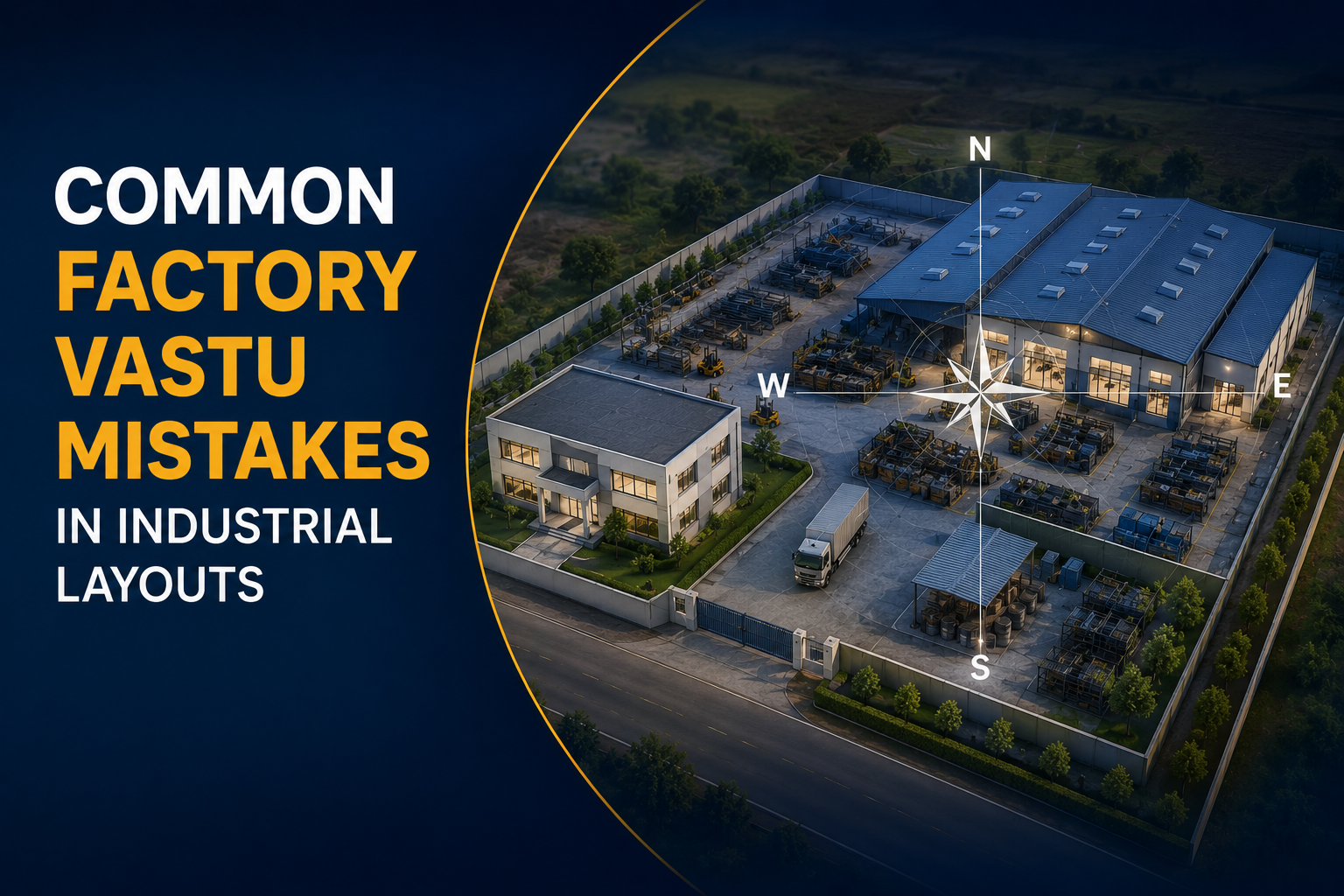
Many businesses focus on machinery, manpower, and production targets but ignore one important factor factory layout balance. Poor industrial planning can affect workflow, employee comfort, operational stability, and overall business efficiency.
In 2026, more manufacturing businesses are paying attention to Industrial Vastu Shastra because it helps create organised, functional, and balanced industrial environments.
Modern factory planning is no longer only about installing machines. It is also about improving movement flow, reducing operational stress, and supporting long-term business growth.
This is where factory vastu shastra becomes useful.
Why Factory Planning Matters More Than Ever
Factories today are more complex than before. Manufacturing units now handle:
- Automated machinery
- Large inventory systems
- Workforce coordination
- Logistics management
- Safety compliance
- Fast production timelines
When factory layouts are poorly organised, businesses often face:
- Production delays
- Workflow confusion
- Employee stress
- Safety risks
- Inventory congestion
- Communication gaps
Modern industrial businesses are now focusing on workplace wellness, efficient layouts, and sustainable operations. These goals strongly align with industrial vastu shastra principles.
What Is Factory Vastu Shastra?
Factory Vastu Shastra is the application of Vastu principles in industrial spaces, manufacturing plants, warehouses, and workshops.
It focuses on:
- Machine placement
- Entrance direction
- Storage management
- Workflow movement
- Office positioning
- Energy balance
- Ventilation and lighting
The goal is to create a factory environment that feels organised, stable, productive, and easy to manage.
Common Factory Vastu Mistakes Businesses Make
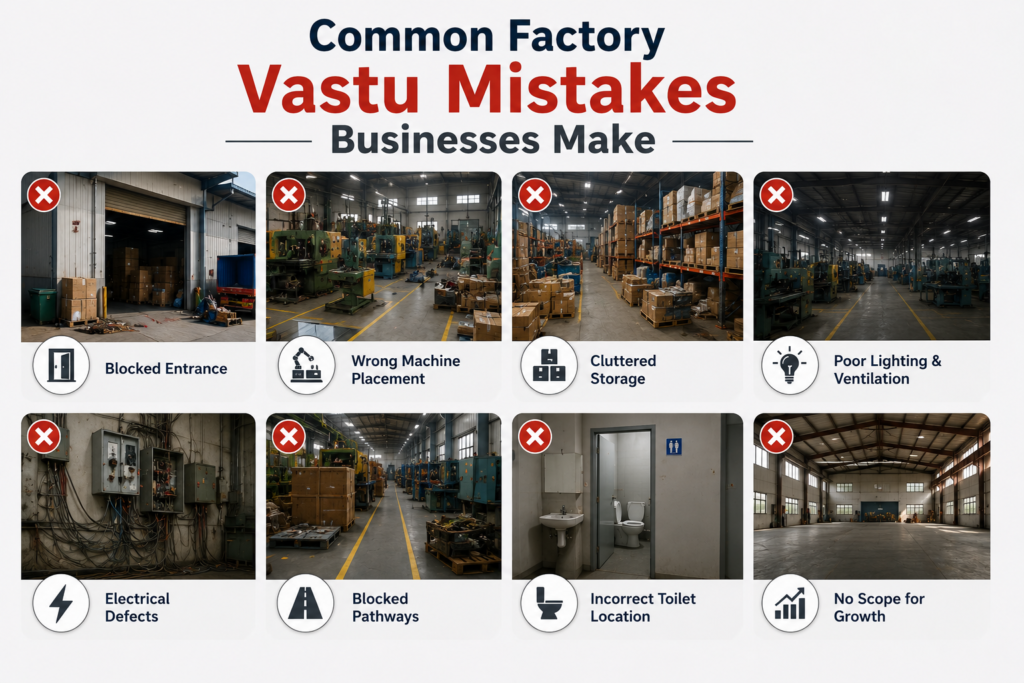
1. Poor Entrance Planning
The entrance is one of the most important parts of any industrial setup.
Many factories have:
- Congested entry points
- Blocked movement areas
- Poor visibility
- Unorganised loading zones
This creates operational confusion and affects smooth movement inside the factory.
Why It Matters
A clean and open entrance supports:
- Better workflow
- Easier logistics
- Smooth employee movement
- Organised transportation flow
2. Incorrect Machine Placement
One of the biggest mistakes in vastu for factory planning is random machine positioning.
Heavy machinery placed without workflow planning often creates:
- Congested work areas
- Excessive movement
- Noise concentration
- Safety issues
How It Affects Business
Poor machine placement reduces:
- Operational efficiency
- Employee comfort
- Workflow coordination
It can also increase production delays and maintenance challenges.
3. Cluttered Storage Areas
Storage management plays a major role in industrial operations.
Factories often struggle with:
- Overloaded inventory areas
- Unorganised raw materials
- Poor dispatch systems
- Confusing movement pathways
This creates unnecessary stress for employees and affects operational clarity.
Why Storage Planning Is Important
Industrial vastu shastra encourages organised zoning for:
- Raw materials
- Finished goods
- Packaging sections
- Dispatch movement
Proper planning supports smoother workflow and faster operations.
4. Poor Ventilation and Natural Light
Many industrial buildings suffer from:
- Closed layouts
- Poor airflow
- Excess heat
- Dark working environments
This negatively affects employee wellness and productivity.
How Modern Factories Solve This
Modern factories now focus on:
- Cross ventilation
- Skylights
- Open layouts
- Natural airflow systems
Interestingly, these ideas align closely with vastu for industry principles.
Operational Issues Commonly Seen in Poorly Planned Factories
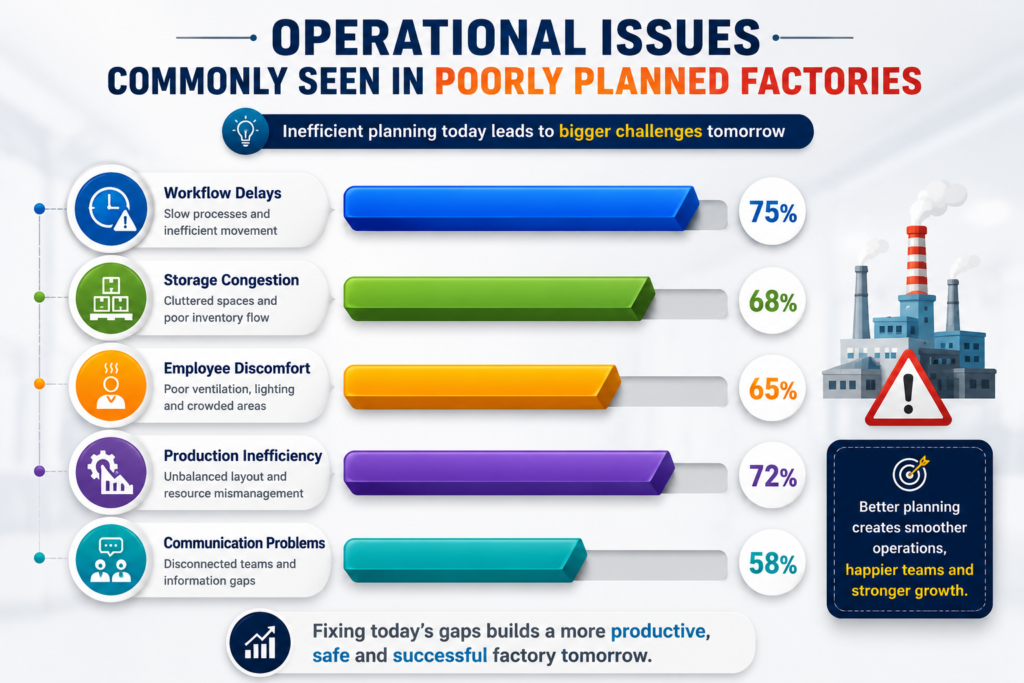
5. Poor Workflow Movement
Some factories grow without proper layout expansion planning.
As new departments and machines are added randomly, movement becomes confusing.
Employees may struggle with:
- Long travel paths
- Congested movement
- Delayed material transfer
- Unsafe work conditions
How Industrial Vastu Helps
Industrial vastu shastra focuses on smoother workflow alignment between:
- Storage
- Production
- Packaging
- Dispatch
This reduces unnecessary movement and improves efficiency.
6. Ignoring Employee Comfort
Modern industries are increasingly focusing on workplace wellness.
Factories with poor layouts often create:
- Mental fatigue
- Stressful work environments
- Communication gaps
- Reduced motivation
Why Employee Wellness Matters
Comfortable work environments support:
- Better focus
- Higher productivity
- Improved teamwork
- Lower stress levels
This is one reason why modern businesses are now exploring factory vastu shastra planning.
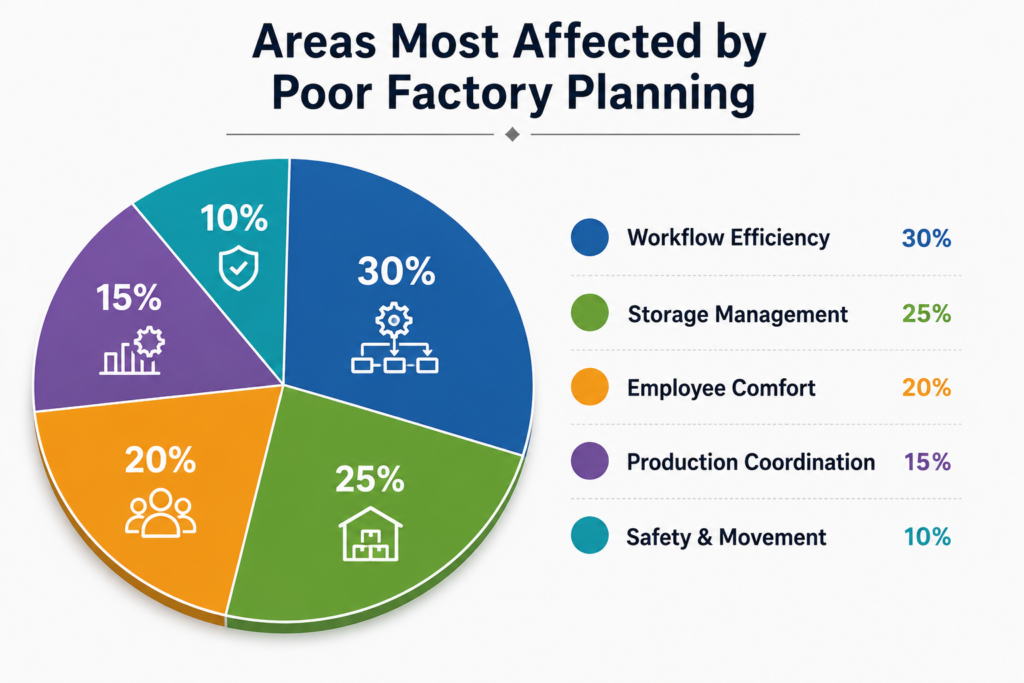
Areas Most Affected by Poor Factory Planning
How Modern Industries Use Industrial Vastu Shastra
Modern industrial architecture already focuses on:
- Efficient layouts
- Sustainable planning
- Better ventilation
- Functional zoning
- Employee safety
Industrial vastu shastra supports these goals by encouraging balanced and organised industrial environments.
Today, many businesses combine:
- Modern factory infrastructure
- Smart workflow systems
- Practical Vastu planning
without affecting contemporary industrial design.
How to Avoid Major Factory Vastu Mistakes
Keep Pathways Clear
Avoid blocking operational movement areas with extra materials or unused equipment.
Improve Airflow
Use ventilation systems, windows, and skylights wherever possible.
Separate Functional Zones
Maintain clear distinction between:
- Raw materials
- Production sections
- Packaging
- Dispatch
Plan Expansion Properly
Do not add machines or storage areas randomly during factory expansion.
Organise Storage Systems
Maintain structured inventory management to avoid confusion.
Reduce Visual Clutter
Clean and organised workspaces improve mental clarity and operational efficiency.
Industrial Vastu Shastra and Workplace Wellness
Today’s industrial businesses understand that productivity depends not only on machines but also on employee wellbeing.
A balanced industrial environment supports:
- Better morale
- Reduced stress
- Smoother communication
- Higher efficiency
This is why vastu for industry planning is becoming more relevant in modern manufacturing spaces.
FAQs
Q1. What is factory vastu shastra?
Factory Vastu Shastra is the application of Vastu principles to industrial spaces, manufacturing units, and warehouses to improve workflow, balance, and operational efficiency.
Q2. How does industrial vastu shastra help businesses?
It helps improve factory organisation, machine placement, workflow movement, employee comfort, and space management.
Q3. Can modern factories follow vastu for industry principles?
Yes. Modern factories can combine industrial architecture and Vastu planning without affecting functionality.
Q4. Why is machine placement important in factory planning?
Poor machine placement creates congestion, workflow confusion, and operational inefficiency.
Q5. Does factory Vastu affect employee wellbeing?
Organised layouts, ventilation, natural light, and balanced workspaces support employee comfort and productivity.
Q6. Can existing factories improve Vastu without reconstruction?
Yes. Many improvements involve layout adjustments, storage organisation, ventilation upgrades, and better workflow planning.
Q7. Why are businesses focusing on workplace wellness in 2026?
Modern industries understand that employee wellbeing directly affects productivity, communication, and operational stability.